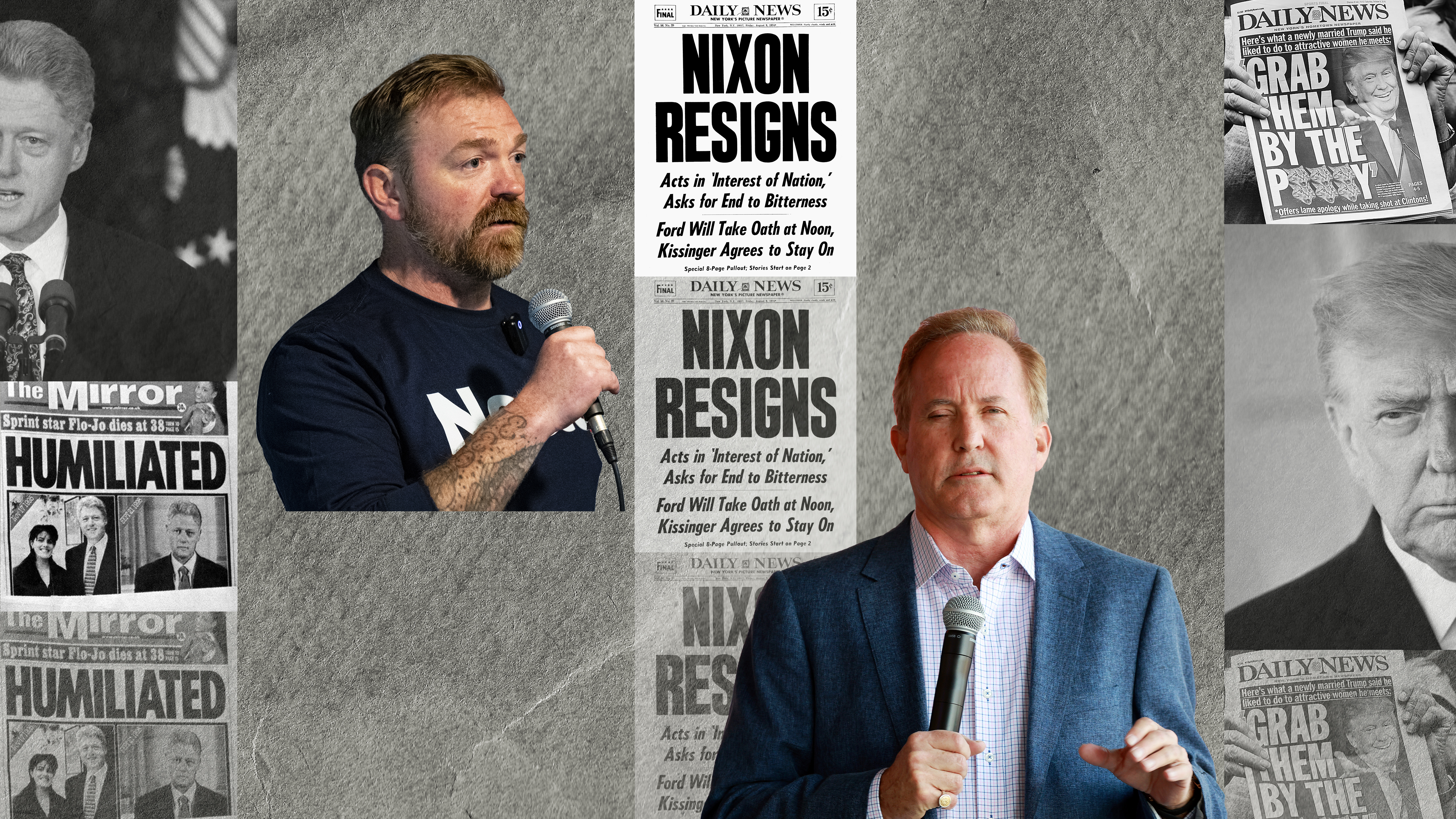
The article argues that political scandals no longer carry the same career-ending weight they once did, citing modern examples like those facing Texas and Maine politicians. Experts suggest this shift is due to changing norms, hyperpolarization, partisan loyalty, and a fragmented media environment, allowing politicians to survive controversies by leveraging public distrust.
Key points
- Modern political figures face various scandals (e.g., legal issues, infidelity) that were once sufficient to end careers.
- Political scientists attribute the ability of modern politicians to survive scandal to hyperpolarization and partisan loyalty.
- Experts suggest that today's strategy for facing controversy is to 'dig in,' blame opponents, and maintain strong party support.
- The shift is linked to a fragmented, digital media ecosystem, which differs greatly from past, more uniform news environments.
Claims assessed
- VerifiableIn the past, scandals could easily end political careers, as demonstrated by figures like Gary Hart and Chris Lee.
- VerifiableBrandon Rottinghaus attributes politicians' survival in scandal to changing norms, hyperpolarization, partisan loyalty, and deep distrust of the media.
- VerifiableKevin Madden suggests that today's fragmented digital media environment allows politicians to withstand scandals better than in previous eras.
Missing context
The article does not provide specific data or analysis detailing how the current media environment (e.g., social media algorithms) directly influences voter behavior regarding scandal coverage, only stating that it is a factor.