tribune.com.pk · · PK
Trumps 100000 H 1b Visa Fee Is Unlawfulus Judge Rules
News Analysis — AI Analysis
Original analysis generated by News Analysis. This is our own commentary on the story, not the publisher's article text.
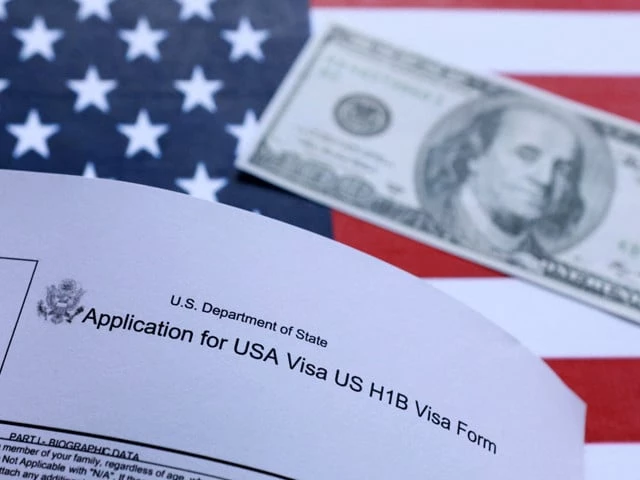
A federal judge ruled that a $100,000 fee imposed by former President Donald Trump on H-1B visas for skilled foreign workers was unlawful. Judge Leo Sorokin determined that the payment constituted an unauthorized tax rather than a legitimate penalty under federal immigration law. The ruling stated that the president lacked Congressional authorization to levy such a tax.
Key points
- A federal judge struck down Trump's $100,000 H-1B visa fee, deeming it an unlawful tax.
- The lawsuit was filed by 20 Democratic state attorneys general in Boston.
- Trump's administration argued the fee was a lawful monetary penalty authorized under immigration law.
- Judge Sorokin concluded that because the payment functioned as a tax, Trump lacked Congressional authority to implement it.
- Sorokin compared this ruling to a previous Supreme Court decision that struck down Trump's tariffs.
Claims assessed
- VerifiableA federal judge ruled that the $100,000 H-1B visa fee imposed by Donald Trump was unlawful.
- VerifiableThe judge determined the fee was a tax and not a penalty authorized by Congress.
- VerifiableTrump's administration claimed the fee was a lawful penalty under federal immigration law.
Missing context
The article does not specify the current status of the $100,000 fee or whether any appeals process has been initiated by the administration.
Topic context
Related topics
The full article is on the original publisher site.
AI insight
AI-generatedThe ruling invalidating the H-1B fee provides immediate operational relief for skilled foreign labor input, causing GLOBAL_TECH, EM_INDUSTRIALS, and GLOBAL_BANKING to see short-term cost improvements (Magnitude 2). Key risk: The sustained margin benefit is limited by the persistent global shortage of high-skilled talent and wage inflation.
The ruling invalidates a significant, non-authorized fee ($100,000) on H-1B visas. This directly reduces the compliance cost and input barrier for high-skilled foreign labor entering the US market (affecting global tech/industrial supply chains). The primary commercial mechanism is regulatory relief, reducing operational costs for companies relying on skilled immigration.
Signals our AI researcher identified
Extracted by our AI model from this article and related public sources — not direct quotes from the publisher.
- $100,000 H-1B visa fee ruled unlawful
- Judge Leo Sorokin issued the ruling
- Lawsuit filed by 20 Democratic state attorneys general
- Fee deemed an unauthorized tax
- Impacts skilled foreign workers/immigration process
Affected products & commodities
- H-1B visa access
- Skilled foreign labor input
Supply-chain signals
- US high-skilled talent pipeline
- Immigration compliance cost structure
Historical parallels
- Past regulatory rulings (e.g., tariffs, taxes) often lead to immediate adjustments in corporate legal and HR spending budgets; the magnitude of impact depends on the overall volume of affected visas.
This analysis would be wrong if
If corporate spending adjustments on HR/Legal budgets are delayed beyond a week, or if major tech companies absorb the savings into broader employment structures rather than realizing it as an isolated cost reduction.
Industrial firms benefit from reduced operational costs for specialized foreign labor; therefore EM_INDUSTRIALS is affected up.
Sign in to see all sector verdicts, full thesis and counter-argument debate.
Sector impact at a glance
- EM_INDUSTRIALSshort
- GLOBAL_BANKINGshort
- GLOBAL_TECHshort
Related stories
irishtimes.com
Russia Sanctions Having an Impact Top Irish Diplomat Says Amid Alumina Pressure
latimes.com
Heres How Musks Spacex IPO Could Crash Your 401k
euronews.com
Inside the Eus Struggle to Police Chinas Tariff Circumvention

koreatimes.co.kr
Upstage Faces IPO Uncertainty Amid Ex Presidential Secretarys Shareholding Controversy
yahoo.com