www.selectscience.net ·
Achieve Reproducible and Scalable Zebrafish Toxicology Research With Automation
Topic context
The full article is on the original publisher site.
AI insight
AI-generatedNo material short/mid-term sector impact detected for this article. Key risk: if automation leads to significant cost reductions in regulatory compliance or accelerates drug discovery timelines.
This article describes an academic research advancement in zebrafish toxicology automation. The commercial mechanism is weak: no direct product, company, or supply chain impact is identified. The research may eventually influence chemical safety regulations, but no immediate commercial effect is evident.
Signals our AI researcher identified
Extracted by our AI model from this article and related public sources — not direct quotes from the publisher.
- Oregon State University's SARL has screened approximately 6,000 chemicals using zebrafish.
- Zebrafish share 70% genetic homology with humans.
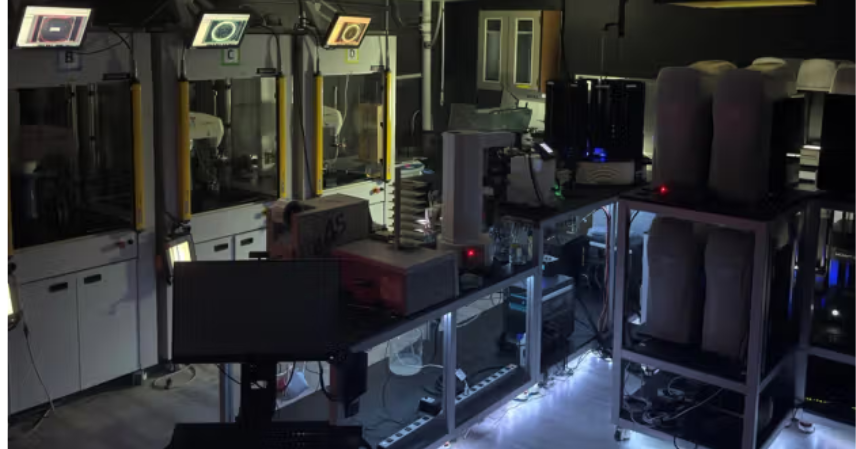
- The lab uses a unified automation platform integrating multiple instruments for high-throughput analysis.
- The facility is the largest specific pathogen-free zebrafish toxicology lab.
- Automation aims to improve chemical safety evaluations and inform regulatory decisions.
This analysis would be wrong if
if a concrete project timeline / cost / off-take agreement is published.
Related stories

dynamicbusiness.com
Tech Tuesday Data Privacy and Synthetic Data Generation Tools

finanznachrichten.de
68718035 bavarian nordic a s bavarian nordic secures additional government contract for the supply of smallpox mpox vaccine 399

rferl.org
Serbia Rule of Law EU Enlargement French German Plan

jpost.com
Article

hawaiitribune-herald.com