winnipegfreepress.com

www.winnipegfreepress.com ·

Negative

20000 people displaced by the philippine earthquake that killed at least 37

Natural Disaster EarthquakesCaution AdviceForests Rivers OceansNatural Disaster Earthquake

Topic context

This topic has been covered 280904 times in the last 7 days across our monitored publishers.

Related topics

The full article is on the original publisher site.

AI insight

AI-generated

The earthquake drives an immediate demand spike for basic construction materials (cement/rebar) in the short term, leading to localized revenue uplift. This impact is strongest in the 48-hour window. Key risk: The sustained nature of this pricing power is threatened by incoming international aid and regional supply alternatives.

The earthquake caused widespread physical destruction (building collapses, housing damage) in the Philippines. This creates an immediate, localized demand spike for construction materials, temporary shelter solutions, and reconstruction services. The primary commercial impact is on local infrastructure rebuilding and humanitarian aid supply chains.

Signals our AI researcher identified

Extracted by our AI model from this article and related public sources — not direct quotes from the publisher.

  • 7.8 magnitude earthquake struck the southern Philippines on June 8, 2026.
  • Over 20,000 people displaced.
  • At least 37 fatalities reported.
  • About 2,000 houses and 117 government buildings damaged.
  • 6,000 public school buildings need assessment.

Affected products & commodities

  • Building materials
  • Temporary housing units
  • Construction equipment

Supply-chain signals

  • Local construction labor availability
  • Supply chain for basic building inputs (cement, steel)
Scarcity riskMedium

Historical parallels

  • Major natural disasters typically trigger immediate spikes in demand for local construction goods and services, followed by government-backed procurement cycles.

This analysis would be wrong if

If major international relief shipments or alternative regional supplies (e.g., from neighboring countries) arrive quickly, mitigating localized scarcity faster than anticipated.

Sector verdictEM_CONSTRUCTIONUpmagnitude 3/3 · confidence 4/5

Basic building materials (cement, rebar/steel) face an immediate demand spike, driving short-term revenue uplift. The key risk is that international aid may rapidly mitigate localized supply scarcity.

Sign in to see all sector verdicts, full thesis and counter-argument debate.

Sector impact at a glance

  • EM_CONSTRUCTIONmid
  • EM_CONSTRUCTIONshort
  • GLOBAL_INDUSTRIALSshort

Related stories

News Analysis — AI Analysis

Original analysis generated by News Analysis. This is our own commentary on the story, not the publisher's article text.

A powerful earthquake struck the southern Philippines, resulting in at least 37 deaths and displacing over 20,000 people. Rescuers continued searching ruined buildings on Tuesday, a day after one of the strongest quakes in fifty years. The quake centered off Mindanao, injured nearly 500 individuals, and caused significant damage across several provinces.

Key points

  • The earthquake was one of the strongest recorded in the Philippines over the past half-century.
  • Over 20,000 people were displaced, with most fleeing to emergency shelters.
  • Initial reports indicate at least 37 fatalities and nearly 500 injuries across various southern provinces.
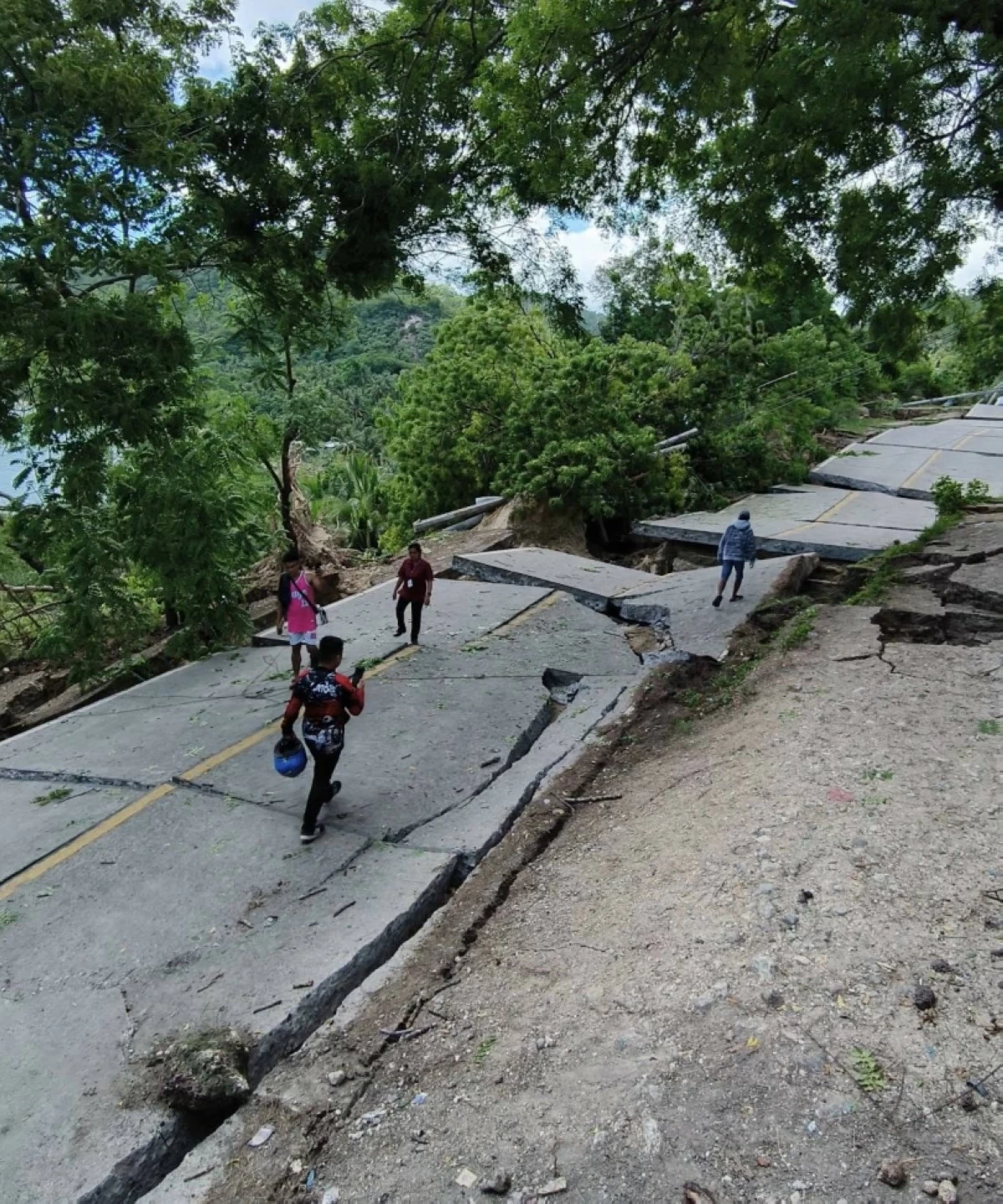
  • The quake caused extensive damage, including building collapses in General Santos (13 deaths) and landslides in Sarangani province (18 deaths).
  • While many feared a tsunami, the only reported damage was limited to six shanties on stilts; smaller waves were seen elsewhere.

Claims assessed

  • VerifiableThe earthquake killed at least 37 people and displaced more than 20,000.
  • VerifiableThe quake centered off Mindanao, the second most populous Philippine island.
  • VerifiableGeneral Santos alone saw at least 13 deaths due to collapsed buildings and falling debris.
  • VerifiableSarangani province reported at least 18 deaths, primarily from a landslide in Glan town.

Missing context

The article provides initial assessments of damages (e.g., 2,000 houses damaged) but does not offer a comprehensive timeline for recovery efforts or the long-term governmental response to the disaster.

About the publisher

winnipegfreepress.com is one of the en-language news outlets that News Analysis aggregates. Coverage from this source appears in our global feed alongside the publisher's own reporting.

Topic context

winnipegfreepress.com files this story under "natural disaster earthquakes" in the GDELT knowledge graph. News Analysis surfaces coverage based on the same open classification taxonomy.