www.bankingnews.gr · · GR
Three Scenarios for Cuba a Plan of Asphyxiation and Military Invasion Children Are Dying Due to Trump S Sanctions
News Analysis — AI Analysis
Original analysis generated by News Analysis. This is our own commentary on the story, not the publisher's article text.
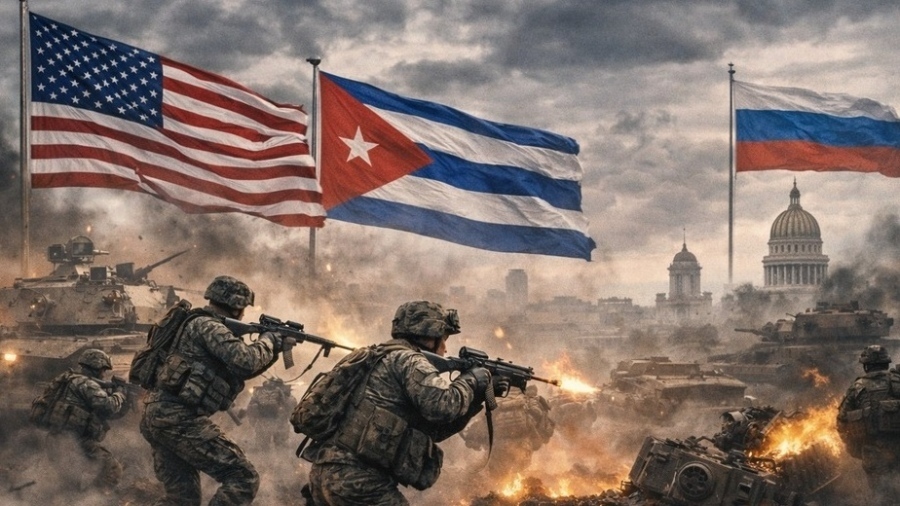
Cuban President Miguel Diaz-Canel warned that the United States could target Cuba through three strategies: economic asphyxiation leading to social unrest, seizing control of the Cuban economy, or launching a direct military invasion. These warnings come amid an ongoing economic crisis in Cuba, exacerbated by US sanctions and fuel blockades. Furthermore, UN officials have stated that American sanctions are directly harming Cuban citizens, particularly children, due to lack of access to basic medicines.
Key points
- Diaz-Canel warned the U.S. could use economic pressure to incite social unrest, creating a pretext for intervention.
- A second potential US goal is gaining financial control over Cuba's economy to facilitate political change.
- The Cuban President highlighted the possibility of direct military action as a third threat scenario.
- UN Human Rights Commissioner Volker Türk warned that U.S. sanctions and fuel restrictions are causing direct harm, especially to vulnerable populations.
- Cuba is currently facing an intense economic crisis due to expanded US sanctions and blockades.
Claims assessed
- VerifiableThe United States could use economic pressure to cause social unrest in Cuba, which would then allow for intervention under the guise of humanitarian aid.
- VerifiableA primary goal of the US is to gain financial control over Cuba's economy to change its political system.
- VerifiableThe UN High Commissioner for Human Rights stated that U.S. sanctions and fuel restrictions are directly harming Cuban citizens, particularly children.
Missing context
The article does not provide specific details or counterarguments regarding the economic policies of Cuba, nor does it offer a detailed analysis of the international legal framework governing humanitarian aid access during times of sanctions.
Topic context
Related topics
The full article is on the original publisher site.
AI insight
AI-generatedHumanitarian need in Cuba will cause specialized medical supplies and energy commodities (diesel/gas) to see immediate upward price pressure (Magnitude 2-3) over the short term. Key risk: The magnitude of these spikes is limited by global inventory buffers, aid procurement rules, and regional supply agreements.
The article describes severe humanitarian and economic distress in Cuba, directly attributed to U.S. sanctions and fuel blockades. This primarily impacts local Cuban producers and consumers (consumer staples/health). The key commercial mechanisms are input cost spikes (due to lack of imported goods/fuel) and capacity utilization collapse across multiple sectors (energy, agriculture, healthcare). The impact is single-country specific (Cuba), leading to a severe reduction in economic output and potential need for humanitarian aid financing.
Signals our AI researcher identified
Extracted by our AI model from this article and related public sources — not direct quotes from the publisher.
- Economic crisis in Cuba exacerbated by U.S. sanctions and fuel blockade.
- UN High Commissioner reported doubling of infant mortality and dropping cancer survival rates in Cuba.
- Power outages exceeding 20 hours daily in Cuba since January 2026.
- Agricultural production declining by 60% in Cuba.
Affected products & commodities
- Medical supplies
- Fuel
- Agricultural inputs/outputs
Supply-chain signals
- U.S. sanctions enforcement on Cuban trade
- Energy supply chain disruption (fuel blockade)
- Global medical supply chains for developing nations
Historical parallels
- (not specified)
This analysis would be wrong if
If international aid funding or alternative energy sources are rapidly deployed to Cuba, stabilizing fuel and medical input costs within 30 days.
Protracted health crisis will sustain elevated demand and potential price increases for medical goods. Pricing power remains strong due to sustained aid funding.
Sign in to see all sector verdicts, full thesis and counter-argument debate.
Sector impact at a glance
- COMMODITY_GASmid
- COMMODITY_GASshort
- EM_MARKETSmid
- GLOBAL_HEALTHCAREmid
- GLOBAL_HEALTHCAREshort
Related stories
bankingnews.gr
three scenarios for cuba a plan of asphyxiation and military invasion children are dying due to trump s sanctions title=
counterpunch.org
Notes on the Latest Jobs Report

newsx.com
Kp Groups Dr Faruk G Patel Announces Institution of Annual Environmental Excellence Awards

zerohedge.com
Crude Benchmarks Touch Lower Esnq Firm After Strong Apac Lead EU Bourses Lag Newsquawk EU
itbusinessnet.com