en.wikipedia.org ·
Armstrong effect
Executive Summary
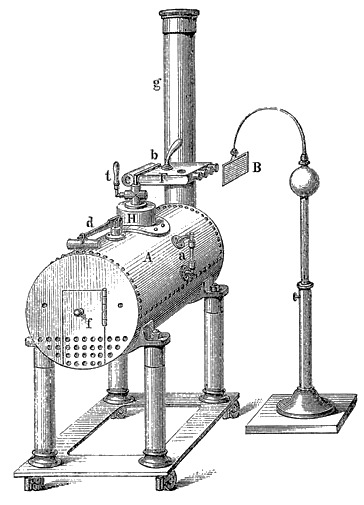
AI-generatedThe Armstrong effect describes the physical process of generating static electricity through the friction of a fluid. It was first observed in 1840 at a colliery when an engine driver noticed sparks resulting from steam leaks, leading to further scientific investigation. William Armstrong subsequently developed this principle into large-scale electrostatic generators.
The article provides historical and scientific background on the Armstrong effect, detailing its discovery and early applications (e.g., paint sprays, hydroelectric machines). It does not contain any current commercial data, market movements, investment announcements, or supply chain disruptions that affect modern product pricing or corporate margins.
Key Insights
- The Armstrong effect is the generation of static electricity caused by fluid friction.
- Initial observations occurred in September 1840 at a colliery near Newcastle upon Tyne, involving steam leaks from an engine's safety valve.
- Early researchers, including Hugh Pattinson and Henry Smith, demonstrated that the electrical sparks could be increased using metal objects.
- Michael Faraday corresponded with Armstrong regarding the phenomenon, suggesting further experiments to determine its cause.
- Armstrong later expanded his work by generating sparks using compressed air and designing full-scale electrostatic generators.
Topic context
The full article is on the original publisher site.