www.cnbc.com ·
IPO Investing and Best Brokers

News Analysis — AI Analysis
Original analysis generated by News Analysis. This is our own commentary on the story, not the publisher's article text.
Initial Public Offerings (IPOs) allow private companies to raise capital by selling shares to the public, which then trade on exchanges like the NYSE or Nasdaq. Investors can participate in IPOs either before trading begins at a set offer price or after it starts trading on the open market. Accessing pre-trading allocations is competitive and requires meeting specific eligibility criteria through a brokerage.
Key points
- An IPO is the process of a private company becoming publicly traded to raise capital for growth or debt reduction.
- Before trading, the IPO price is set by the company and underwriters, while the post-listing market price fluctuates based on supply and demand.
- Pre-trading allocation of shares typically favors institutional investors (around 90%), leaving a smaller portion for individual retail investors.
- To participate in pre-IPO allocations, investors must submit an indication of interest (IOI) through their brokerage, but receiving shares is not guaranteed.
- Once trading begins, any investor with a standard brokerage account can buy and sell the stock on the open market.
Claims assessed
- VerifiableIPOs allow private companies to raise capital by offering shares to investors before they are publicly traded.
- VerifiableThe IPO price is set beforehand, but the market price after trading begins is determined in real time by supply and demand.
- VerifiableRoughly 90% of IPO shares are typically allocated to institutional investors, while only about 10% go to individual investors.
Missing context
The article mentions specific brokerages (like SoFi) but does not provide comprehensive details on their current eligibility requirements or minimum investment thresholds for IPO access. Readers should also be aware that regulatory restrictions from bodies like FINRA can change, affecting availability and rules.
Topic context
The full article is on the original publisher site.
AI insight
AI-generatedThe IPO cycle provides a clear short-term revenue uplift (2-4%) for investment banking services within the next 48 hours. Global Asset Managers see temporary capital inflows into private funds, but sustained structural gains are unlikely in either sector. Main risk: The initial excitement and predicted revenue spikes are highly susceptible to regulatory friction and deal failure.
The article discusses the general mechanism and appeal of Initial Public Offerings (IPOs). This is a capital-raising event for private technology/growth companies (SpaceX, Anthropic, OpenAI) seeking to fund expansion. The immediate impact is on investment banking services (underwriting, advisory fees) and financial platforms (brokers like Morgan Stanley, Fidelity, Schwab), signaling increased demand for global capital markets access.
Signals our AI researcher identified
Extracted by our AI model from this article and related public sources — not direct quotes from the publisher.
- IPO is the process of a private company becoming publicly traded.
- Companies use IPOs to raise capital for growth or debt reduction.
- Potential future IPO companies mentioned include SpaceX, Anthropic, and OpenAI.
- Trading exchanges mentioned are NYSE and Nasdaq.
Affected products & commodities
- Company shares/equity
- Investment banking services
Supply-chain signals
- Access to major public exchanges (NYSE, Nasdaq)
- Underwriting capacity of investment banks
Historical parallels
- Past high-profile IPOs often see initial oversubscription and significant short-term capital inflows into the specific sector/company.
This analysis would be wrong if
If a concrete mega-deal timeline (e.g., SpaceX or Anthropic) is delayed by significant regulatory hurdles, or if the market fails to absorb multiple simultaneous IPOs.
Private market and growth equity funds see a short-term capital inflow (2-3%) driven by media buzz around IPOs. The key risk is that this flow is transient and not based on structural demand.
Sign in to see all sector verdicts, full thesis and counter-argument debate.
Sector impact at a glance
- GLOBAL_ASSET_MANAGERSshort
- GLOBAL_BANKINGshort
Related stories

thehindubusinessline.com
Sensex Nifty50 Today Stock Market Highlights 12th June 2026
tribune.com.pk
Govt Proposes Rs1tr Development Budget
premiumtimesng.com
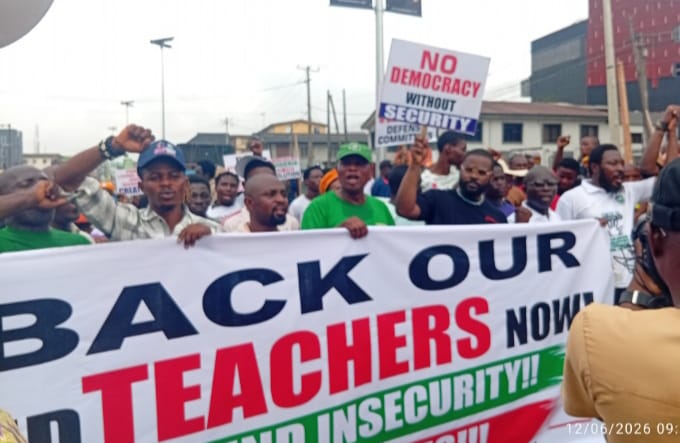
887110 june 12 tension rises as falana led protest against insecurity encounters counter rally in lagos

thisdaylive.com
Ogun 2027 as Candidates Capacity Trumps Pedigree Politics Yayi Emerges as a Game Changer
scottishhousingnews.com