links.org.au · · AU
Bolivian Uprising

News Analysis — AI Analysis
Original analysis generated by News Analysis. This is our own commentary on the story, not the publisher's article text.
Bolivia is experiencing a severe crisis marked by widespread protests and blockades, which have effectively paralyzed the country's economy and daily life. Demonstrators, primarily indigenous campesinos, are demanding the resignation of President Rodrigo Paz Pereira due to his policies that they view as betraying his original promises. The unrest has led to acute shortages of essential goods like fuel, medicine, and food in major urban centers.
Key points
- Protests and blockades have spread across five departments, surrounding La Paz and paralyzing national life.
- The immediate demand from protesters is the resignation of President Rodrigo Paz Pereira.
- Demonstrators criticize Paz's economic policies, citing cuts to subsidies and privatization efforts that contradict his 'capitalism for all' platform.
- Chronic fuel shortages have halted transport in La Paz, leading to severe scarcity of food and medical supplies.
- The protests are heavily concentrated in regions (Quechua- and Aymara-speaking) that were crucial to Paz's election victory.
Claims assessed
- VerifiableProtesters are demanding the resignation of President Rodrigo Paz Pereira because he has implemented policies like cutting subsidies and selling state enterprises.
- VerifiableThe blockades have caused severe shortages, leading to astronomical prices for ground beef and scarcity of basic foodstuffs in La Paz.
- VerifiableThe National Health Fund warns that medical supplies may soon run out unless the roadblocks are lifted.
Missing context
The article does not provide an assessment of the government's response to the protests beyond mentioning police/military actions (e.g., opening a road). It also lacks information regarding international mediation efforts or potential timelines for political resolution.
Topic context
The full article is on the original publisher site.
AI insight
AI-generatedThe immediate crisis will push diesel/fuel prices and essential foodstuffs up sharply (3-4 magnitude) within 24-48 hours. Key risk: The predicted spike magnitudes are likely moderated by local inventory buffers, alternative transport routes, or targeted government intervention.
The unrest in Bolivia directly impacts local supply chains by causing blockades and strikes, leading to scarcity of essential goods. The primary commercial mechanism is a sudden disruption of input costs (fuel subsidies) and consumer purchasing power due to reduced availability of food and transport services.
Signals our AI researcher identified
Extracted by our AI model from this article and related public sources — not direct quotes from the publisher.
- Protests and blockades in Bolivia (early May 2026)
- Key demands include restoration of fuel subsidies and control of food prices
- Transport workers are on indefinite strike
- Essential supplies running low in La Paz
- Unrest is linked to government austerity measures and privatization plans
Affected products & commodities
- Fuel/Diesel
- Essential foodstuffs
- Agricultural inputs
Supply-chain signals
- Internal distribution network paralysis (La Paz)
- Fuel subsidy removal impact on local logistics costs
Historical parallels
- Past civil unrest in developing nations often leads to immediate price spikes and rationing of fuel/food, with temporary government intervention (subsidies) being the primary stabilizing mechanism.
This analysis would be wrong if
If localized inventories of fuel and food prove sufficient to buffer the initial supply shock, or if military/government forces successfully restore critical logistics channels faster than anticipated.
Fuel subsidy removal and blockades will cause a sharp spike in diesel/fuel prices and freight rates within the next 24-48 hours. Key risk: Alternative transport modes may cap the immediate price increase below the initial high estimate.
Sign in to see all sector verdicts, full thesis and counter-argument debate.
Sector impact at a glance
- EM_FOODmid
- EM_FOODshort
- EM_TRANSPORTmid
- EM_TRANSPORTshort
- GLOBAL_INDUSTRIALSmid
- GLOBAL_INDUSTRIALSshort
Related stories

africa.com
Uganda Govt Targets 10 2 Growth as Musasizi Reads Shs84 4 Trillion Budget
newsbusters.org
Lesley Stahl Cheers Pelosi and Ignores Her Record 60 Minutes
thesun.ng
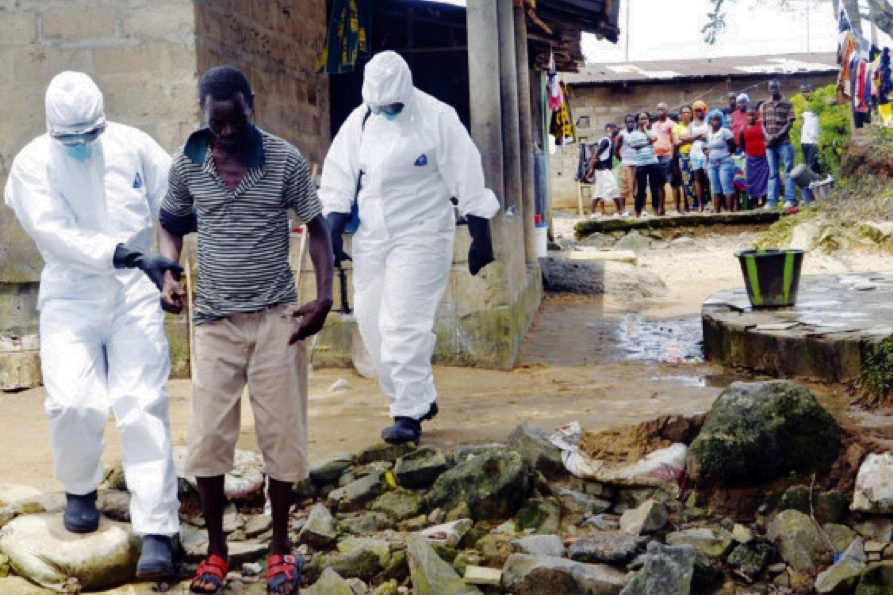
Plateau Set to Contain Ebola Outbreak

livemint.com
Diesel Curbs Raise Concerns for Hospitals It Parks Dependent on Generator Power

screenrant.com