www.haberyazar.com ·
Avrupa Parlamentosu Gundeminde Turk Yetkiliye Yaptirim Onerisi
News Analysis — AI Analysis
Original analysis generated by News Analysis. This is our own commentary on the story, not the publisher's article text.
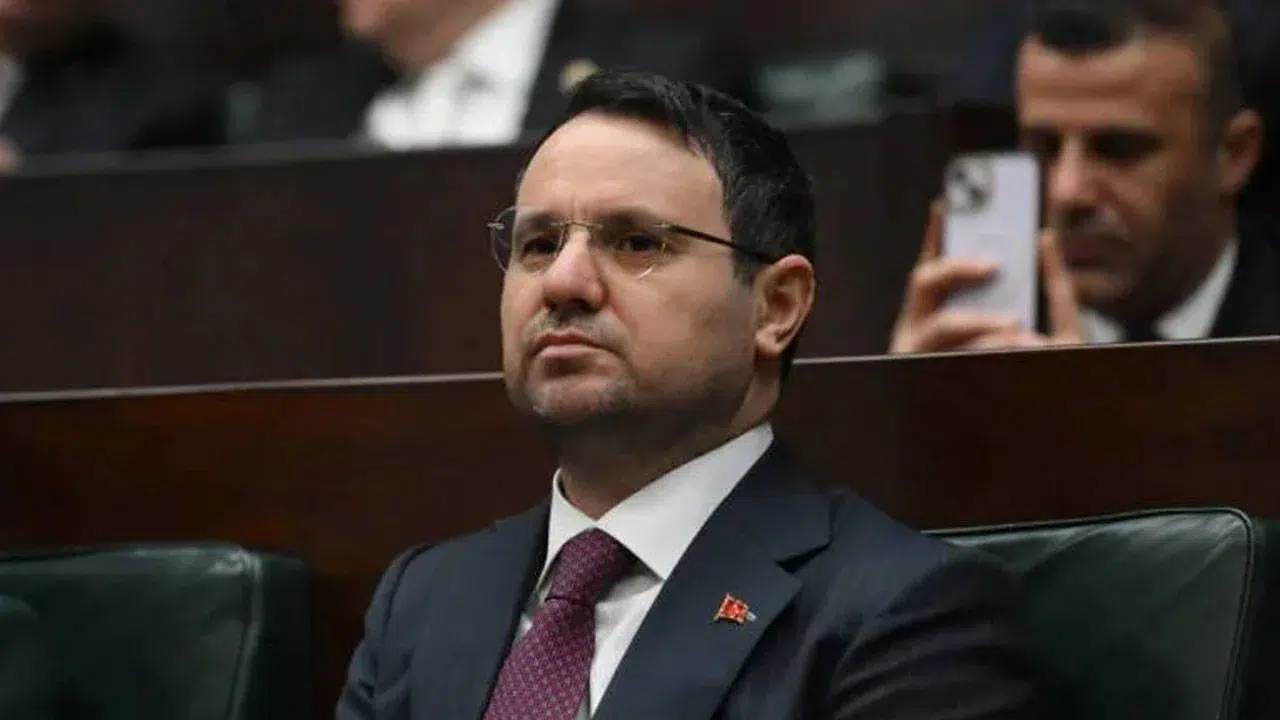
A report expected to be voted on by the European Parliament (EP) highlights a proposal to include Turkish Justice Minister Akın Gürlek on a sanctions list. The Green Group's Vladimir Prebilic stated that this inclusion is due to concerns over political motivations in judicial processes, specifically calling for asset freezing and restricted financial access for Gürlek. He also noted that while Turkish officials have attempted to remove the name from the draft, progress on EU membership requires concrete changes in law and democracy standards.
Key points
- The EP report scheduled for a vote on June 17th proposes adding Justice Minister Akın Gürlek to an EU sanctions list.
- Sanctions proposed include freezing Gürlek's assets within the EU and restricting his access to financial systems.
- Green Group member Vladimir Prebilic linked the inclusion of Gürlek to concerns about politically motivated judicial processes in Turkey.
- Despite diplomatic efforts from Turkish officials, Prebilic stated that removing the name requires action from Turkey itself, not the EP.
- Prebilic emphasized that progress on issues like visa liberalization and Customs Union updates is contingent upon concrete improvements in law and democracy standards.
Claims assessed
- VerifiableThe European Parliament report scheduled for June 17th proposes adding Justice Minister Akın Gürlek to an EU sanctions list.
- VerifiableSanctions proposed against Gürlek include freezing his assets within the EU and restricting his financial system access.
- VerifiableVladimir Prebilic stated that Turkey's diplomatic efforts to remove Gürlek's name from the draft are ineffective because change must come from Ankara.
- VerifiableThe EU membership process for Turkey cannot advance without concrete improvements in law and democracy standards.
Missing context
The article does not specify the exact legal basis or evidence cited by the Green Group for classifying Gürlek's actions as politically motivated judicial misconduct, nor does it detail the specific 'democratic changes' that Prebilic believes Turkey must implement to advance its EU candidacy.
Topic context
Related topics
The full article is on the original publisher site.
AI insight
AI-generatedPotential EU sanctions on a high-ranking Turkish official push the TRY exchange rate 2-4% lower in the short term, while global banks face sustained profitability pressure. The key risk across both sectors is that market overreaction may be limited if sanctions are narrowly targeted or if non-EU trade flows remain robust.
The proposed European Parliament sanctions against a high-ranking Turkish official (Akın Gürlek) signal increased political risk and potential regulatory friction between Turkey and the EU. This primarily affects capital flows, banking access, and general investor sentiment regarding Turkish assets and corporate operations that rely on EU financial systems. The mechanism is regulatory/political, impacting FX_EM stability and global banking confidence in Turkey.
Signals our AI researcher identified
Extracted by our AI model from this article and related public sources — not direct quotes from the publisher.
- European Parliament vote scheduled for June 17.
- Proposal targets adding Turkish Justice Minister Akın Gürlek to EU sanctions list.
- Sanctions involve freezing assets and restricting access to financial systems within the EU.
- Turkish officials requested removal of Gürlek's name from the report.
Affected products & commodities
- Turkish Lira (TRY) exchange rate
- Access to European financial markets for Turkish entities
Supply-chain signals
- EU-Turkey trade finance mechanisms
- Cross-border banking compliance risk
Historical parallels
- Previous EU sanctions against Turkish officials or entities have historically led to increased volatility and temporary liquidity constraints for affected sectors, but the magnitude depends on the scope of financial restrictions.
This analysis would be wrong if
If diplomatic channels successfully de-escalate the political dispute or if major trading partners continue robust, unhindered bilateral trade with Turkey.
Mid-term regulatory uncertainty will maintain downward pressure on the TRY (3-6%) over 2-4 weeks. The key risk is that sustained non-EU trade flows may offset structural EU compliance pressures.
Sign in to see all sector verdicts, full thesis and counter-argument debate.
Sector impact at a glance
- FX_EMmid
- FX_EMshort
- GLOBAL_BANKINGmid
- GLOBAL_BANKINGshort