thesun.ng · · NG
Bush Economy
News Analysis — AI Analysis
Original analysis generated by News Analysis. This is our own commentary on the story, not the publisher's article text.
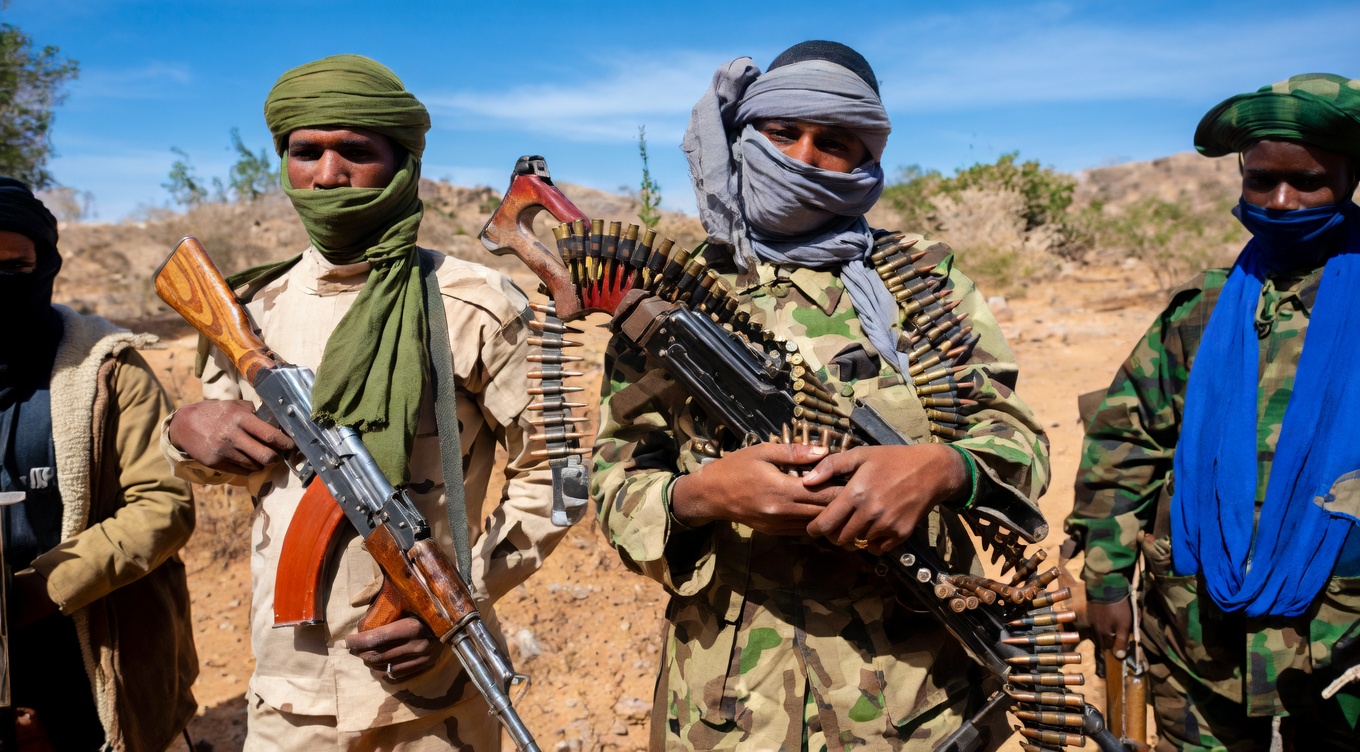
The article argues that terrorism and banditry are causing legitimate businesses to fail while criminal enterprises flourish, creating a 'bush economy.' This underground system involves structured extortion, illegal taxation, and ransom collection, diverting wealth from productive sectors. The impact is severe, forcing families to sell assets for ransoms and significantly hindering economic growth.
Key points
- Terrorism has transformed Nigeria's insecurity crisis into a major economic challenge, beyond just humanitarian concerns.
- Criminal groups are establishing a 'bush economy' by imposing shadow taxes and levies on farmers, traders, and transport operators in conflict zones.
- The need to pay ransoms is forcing many families to liquidate assets and engage in fundraising through various digital platforms.
- Kidnapping for ransom is highlighted as a highly profitable component of this criminal economy.
- Statistics show that between July 2024 and June 2025, at least 4,722 people were abducted, with an estimated N2.56 billion paid in ransoms.
Claims assessed
- VerifiableTerrorism has caused a shift where criminal enterprises are thriving while legitimate businesses struggle to survive.
- VerifiableArmed groups have moved beyond simple kidnapping and cattle rustling to establish structured shadow taxation systems in rural areas.
- VerifiableBetween July 2024 and June 2025, kidnappers demanded approximately N48 billion while victims paid an estimated N2.56 billion in ransom payments.
Missing context
The article provides specific dates for recent attacks (January 2026) but does not offer any current government strategies or proposed economic interventions designed to combat the 'bush economy' or restore security.
Topic context
Related topics
The full article is on the original publisher site.
AI insight
AI-generatedSevere insecurity in Nigeria pushes local food commodity prices up (10-25%) and structurally depresses agricultural output. EM_FOOD, EM_CONSTRUCTION, and EM_INDUSTRIALS are all facing significant cost increases and revenue declines due to escalating input costs and labor shortages. Main risk: The actual magnitude of decline may be moderated by resilient informal economies or targeted international funding for critical infrastructure.
The primary commercial mechanism is the severe disruption of legitimate economic activity due to insecurity. This directly increases input costs for agricultural production (EM_FOOD) through extortion/illegal taxation, reduces labor availability/volume (EM_INDUSTRIALS), and disrupts local supply chains necessary for construction and commerce (EM_CONSTRUCTION). The channel is primarily 'input_cost' escalation and 'supply_shortage' of goods/labor.
Signals our AI researcher identified
Extracted by our AI model from this article and related public sources — not direct quotes from the publisher.
- Terrorism severely impacting Nigerian economy (Nigeria)
- Ransom payments totaling N2.56 billion expected (July 2024 - June 2025)
- Illegal taxation and extortion affecting rural communities
- Mass kidnappings reported in Kaduna and Borno (early 2026)
Affected products & commodities
- Agricultural output
- Local commercial goods
- Labor services
Supply-chain signals
- Rural agricultural supply chains (Nigeria)
- Internal security stability in Nigeria
Historical parallels
- Conflict zones typically see a sharp decline in formal economic activity, leading to localized food and commodity scarcity, forcing reliance on informal/illicit economies.
This analysis would be wrong if
If a concrete timeline for security stabilization, major humanitarian aid influx, or sustained foreign investment into key Nigerian sectors is published.
Sustained instability will curtail large-scale commercial construction projects in Nigeria; therefore EM_CONSTRUCTION is affected down.
Sign in to see all sector verdicts, full thesis and counter-argument debate.
Sector impact at a glance
- EM_CONSTRUCTIONmid
- EM_CONSTRUCTIONshort
- EM_FOODmid
- EM_FOODshort
- EM_INDUSTRIALSmid
- EM_INDUSTRIALSshort
Related stories

theguardian.com
Taiwan Citizens Learn Fly Pilot Drones Courses China

chattanoogan.com
Walker County Leaders Families To
links.org.au
Jammu Kashmir Under Siege Unfinished Revolt Against National Oppression and Class Exploitation

philstar.com
Dbm Releases P362 Million Mindanao Quake Aid

bangaloremirror.indiatimes.com