greentechlead.com ·
Indias Energy Storage Boom Faces Tariff Financing and Supply Chain Risks Despite 90 7 Gw Tender Surge
The full article is on the original publisher site. This page only shows the headline and a very short excerpt.
AI insight
AI-generatedIndia's energy storage boom faces commercial risks: aggressive tariff bidding squeezes margins for project developers; financing difficulties increase cost of capital; reliance on imported lithium-ion cells creates supply chain vulnerability. The channel is input_cost (battery cells) and supply_shortage (global lithium supply). Impact is India-specific but with global lithium supply chain links. Winners: domestic BESS integrators with local cell manufacturing; Losers: developers with high tariff commitments.
Signals our AI researcher identified
Extracted by our AI model from this article and related public sources — not direct quotes from the publisher.
- Cumulative tendered energy storage capacity in India rose from 6.8 GW (2018) to 90.7 GW (projected 2025).
- Standalone BESS accounts for 60% of total tendered capacity.
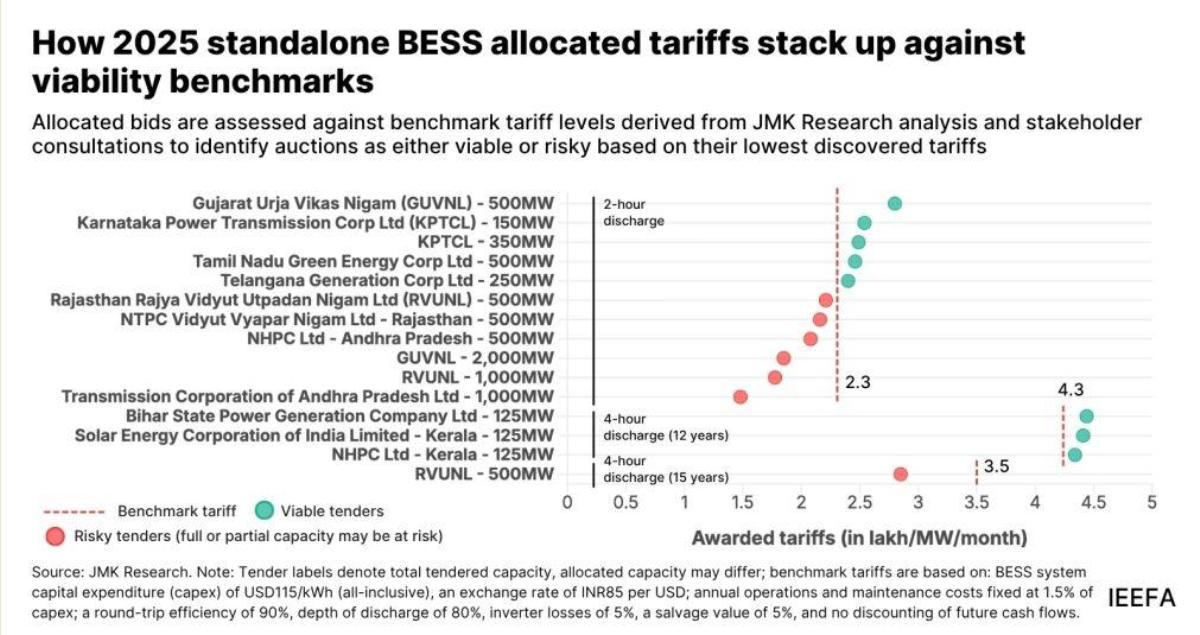
- Nearly 75% of allocated 2-hour BESS capacity is deemed 'at-risk' due to tariff, financing, and supply chain issues.
- India relies on lithium-ion technology, exposing it to global supply chain disruptions.
Project delays could reduce India's renewable energy growth trajectory, impacting EM capital flows by 3-5% underperformance over 1-4 weeks.
Sign in to see all sector verdicts, full thesis and counter-argument debate.
Sector impact at a glance
- EM_MARKETSmid
- EM_MARKETSshort
- MINING_METALSmid
- RENEWABLESmid
- RENEWABLESshort
- UTILITIESmid
- UTILITIESshort