www.wral.com ·
Eab84 Climate Driven Heat in India S Textile Factories Stifles Workers but Coolers and Ventilation Help
News Analysis — AI Analysis
Original analysis generated by News Analysis. This is our own commentary on the story, not the publisher's article text.
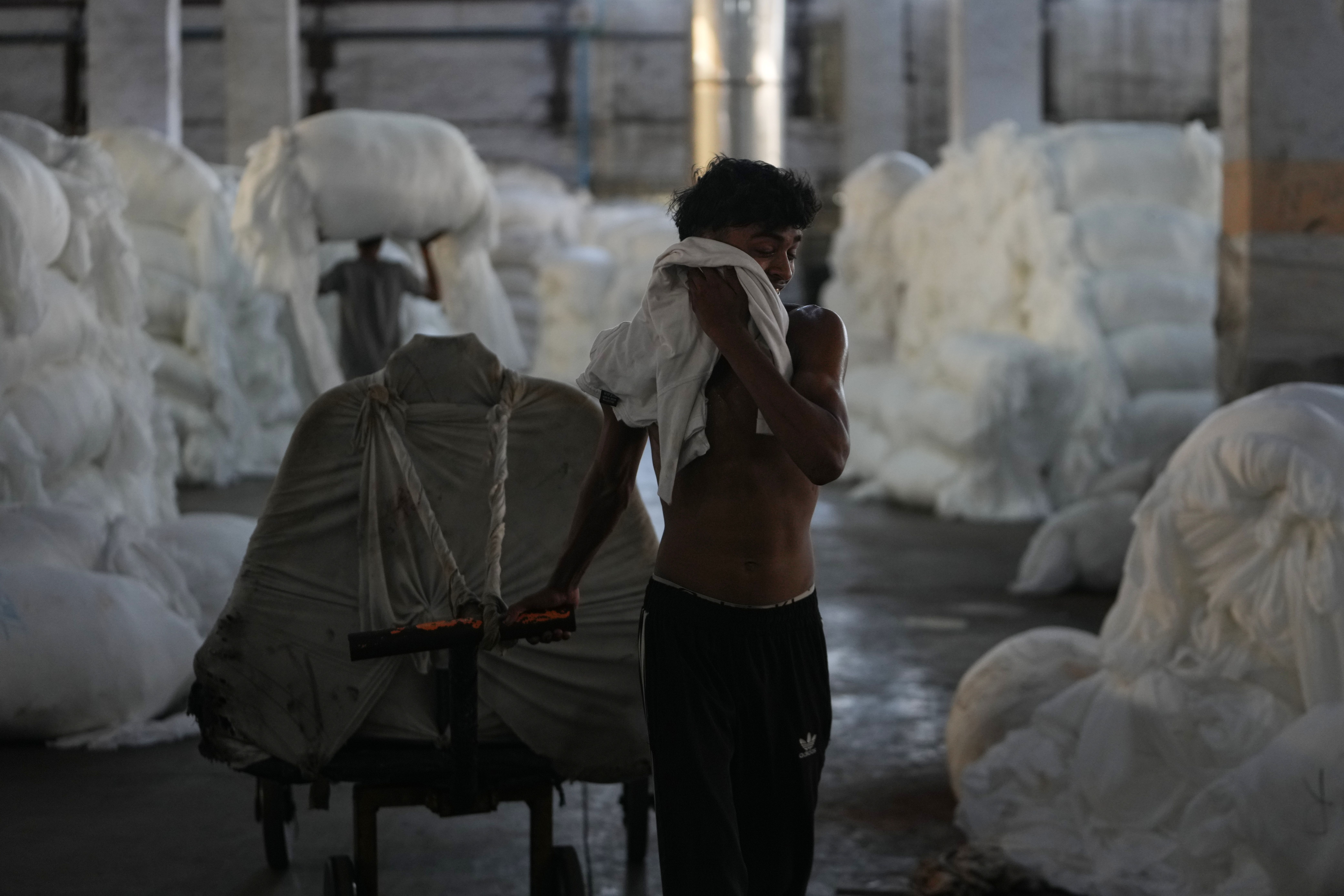
Workers in textile factories near Surat, India, are struggling with oppressive heat and humidity amplified by industrial machinery. While cooling systems like coolers and fans offer temporary relief during breaks, they are often insufficient to mitigate the extreme conditions. The problem is compounded by factory owners' limited ability or willingness to invest in comprehensive cooling infrastructure due to economic pressures.
Key points
- The heat inside textile factories near Surat is intensified by high humidity, steam, and radiating heat from heavy machinery like stenters.
- Workers report feeling weak, dizzy, and excessively sweaty due to the unbearable working temperatures.
- Cooling methods such as mist-spraying fans and evaporative coolers provide only temporary relief during short breaks.
- Factory owners face financial constraints, including losses from US tariffs and supply disruptions, limiting investment in advanced cooling systems.
- The textile industry is vital for producing millions of meters of cloth destined for global markets.
Claims assessed
- VerifiableCoolers are preferred over air conditioners in factories because they do not require sealed rooms and can circulate fresh outside air.
- VerifiableThe textile industry's production is crucial, with millions of meters of polyester cloth being shipped globally for clothing manufacturing.
- VerifiableA 2022 World Bank report estimates that approximately 75% of India’s workforce (380 million people) is affected by climate change impacts.
Missing context
The article mentions that 75% of India's workforce is impacted by climate change but does not detail the specific measures or governmental policies being implemented to address this widespread labor vulnerability.
Topic context
Related topics
The full article is on the original publisher site.
AI insight
AI-generatedExtreme heat and humidity are expected to push Indian finished textiles margins down in the short term (2 magnitude band), with structural margin erosion persisting mid-term. Main risk: The precise quantification of labor productivity loss and the absolute constraint on cooling capex need further verification.
The primary impact is on labor productivity and operational costs within the Indian textile sector due to climate stress and limited capital expenditure. The inability of factory owners to invest in better cooling systems (due to geopolitical tensions/tariffs) directly affects the sustained output capacity and gross margin of local textile manufacturers in India.
Signals our AI researcher identified
Extracted by our AI model from this article and related public sources — not direct quotes from the publisher.
- Textile industry employs over 1.4 million workers in Surat, India.
- Workers face extreme heat and humidity in textile factories.
- Geopolitical tensions (Iran war, U.S. tariffs) hinder investment in cooling solutions.
Affected products & commodities
- Textile goods
- Labor productivity
Supply-chain signals
- Worker health and retention rates in Surat's textile cluster
- Factory operational uptime due to heat stress
Historical parallels
- Extreme weather events (e.g., heatwaves) have historically led to temporary production slowdowns and increased labor costs in outdoor/industrial sectors, but no specific price mechanism is detailed here.
This analysis would be wrong if
If global buyers successfully diversify sourcing away from Surat/India, or if local government subsidies/alternative financing mechanisms prove sufficient to fund necessary HVAC upgrades.
Mid-term margin compression and capacity risk persist for Indian textiles due to sustained lack of cooling investment. The key risk is that alternative financing or non-geopolitical supply sources could mitigate the structural capex bottleneck.
Sign in to see all sector verdicts, full thesis and counter-argument debate.
Sector impact at a glance
- EM_TEXTILEmid
- EM_TEXTILEshort
Related stories

leadership.ng
Jigawa Charts New Course for Sustainable Development and Transformation
aninews.in
Over 1 Million Women in Local Governance India Champions Women Led Development at Unsc

lankanewspapers.com
Easter Sunday Bombings a Nation Betrayed by Those Sworn to Protect It

moneycontrol.com
Body of Indian Seafarer Killed in US Strike Reaches Up Village After 8 Days Watch Article
deccanchronicle.com