www.winnipegfreepress.com ·
Asian Shares Are Mostly Higher and Japans Nikkei Tops 70000 Before Boj Rate Hike
News Analysis — AI Analysis
Original analysis generated by News Analysis. This is our own commentary on the story, not the publisher's article text.
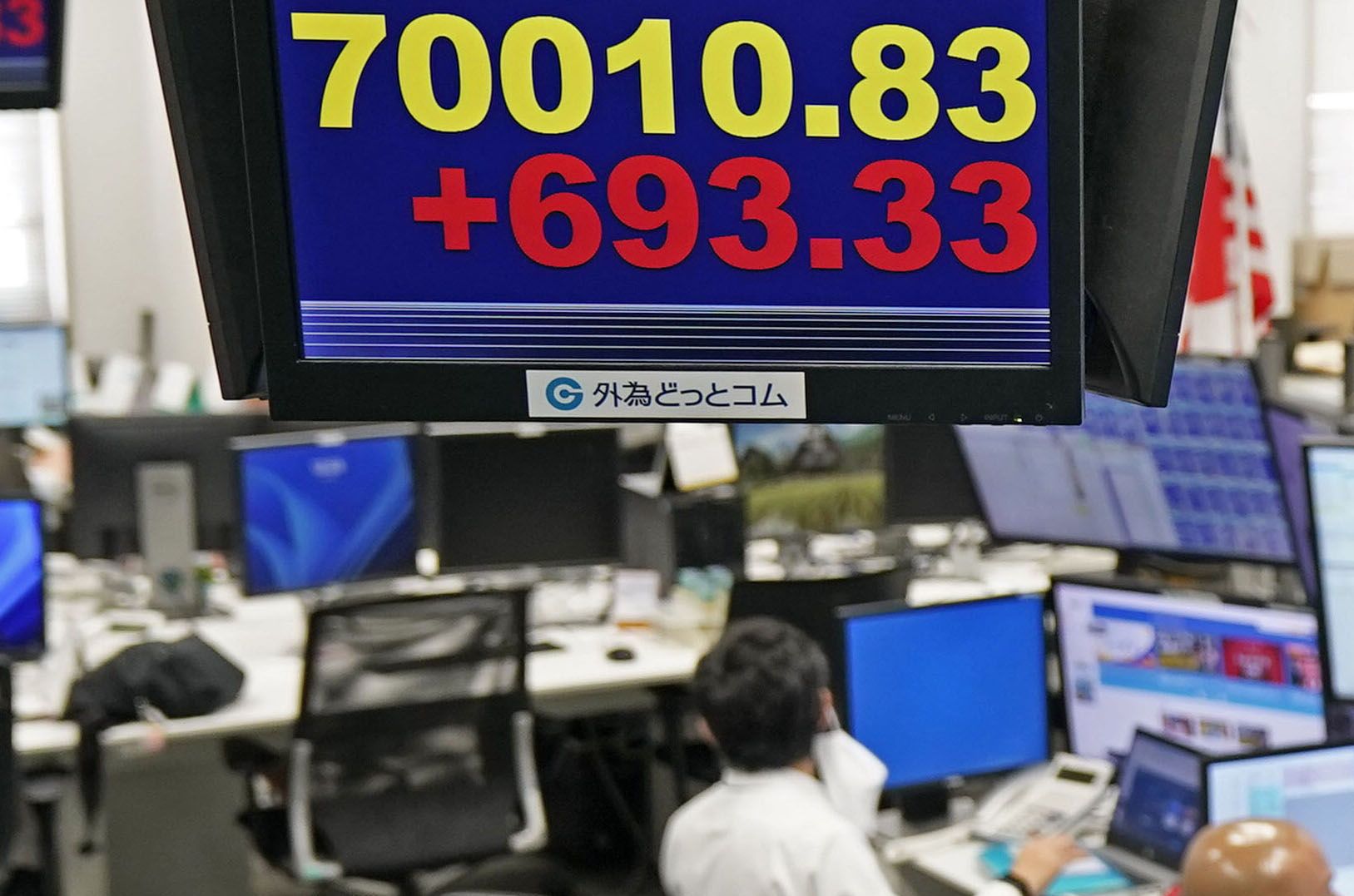
Asian stock markets generally experienced gains, with Japan's Nikkei 225 briefly reaching a record high of 70,000 before declining after the Bank of Japan raised its key interest rate to 1%. Other regional indices showed mixed performance, while global markets on Monday saw significant rallies in U.S. stocks and falling oil prices following tentative agreements between the US and Iran.
Key points
- Japan's Nikkei 225 briefly topped 70,000 before dropping after the Bank of Japan increased its key interest rate to 1%.
- South Korea’s Kospi gained 2.1%, while Taiwan's Taiex and India’s Sensex also saw positive movement.
- The Shanghai Composite index showed minimal gains, and Hong Kong's Hang Seng and Australia's S&P/ASX 200 declined.
- On Monday, global markets rallied, with the S&P 500 rising 1.7% and the Nasdaq composite jumping 3.1%.
- Oil prices fell significantly on expectations that a US-Iran deal might reopen oil flow through the Strait of Hormuz.
Claims assessed
- VerifiableThe Bank of Japan raised its key interest rate to 1%, bringing it to its highest level in three decades.
- VerifiableJapan's Nikkei 225 briefly topped 70,000 for the first time on Tuesday before trimming early gains.
- VerifiableThe S&P 500 rose 1.7% and the Dow climbed 0.9% to a record on Monday due to global rallies.
- VerifiableBrent crude declined to $82.93 a barrel, influenced by hopes of reopening oil flow through the Strait of Hormuz.
Missing context
The article mentions that the US-Iran deal's full impact on oil supply and energy prices will take months to materialize, despite expectations of reopening the Strait of Hormuz. It also notes that negotiations between the US and Iran are expected to continue for 60 days.
Topic context
Related topics
The full article is on the original publisher site.
AI insight
AI-generatedThe immediate signal suggests global tech stocks will see a modest upward lift (2 magnitude) due to easing energy costs. However, most sectors face caution: EM markets are flat, short-term oil price gains are muted, and medium-term commodity prices are pressured by oversupply concerns. Main risk: if the underlying structural forces (like OPEC+ discipline or local political risks) intervene, the positive reflex across all sectors could quickly reverse.
The primary mechanism is mixed regional market performance driven by contrasting central bank actions (BOJ rate hike) and geopolitical commodity shifts (U.S.-Iran oil deal). The BOJ's aggressive rate hike creates a strong local financial signal for Japan, while the S&P 500's rise suggests positive sentiment related to reduced energy input costs (oil price easing), benefiting global industrial/tech sectors.
Signals our AI researcher identified
Extracted by our AI model from this article and related public sources — not direct quotes from the publisher.
- Nikkei 225 topped 70,000 (up 0.6%) following BOJ rate hike to 1%
- South Korea's Kospi gained 2.1%
- S&P 500 rose 1.7% amid easing oil prices
- Australia's S&P/ASX 200 fell 0.3%
- Hong Kong's Hang Seng dropped 1.3%
Affected products & commodities
- Japanese equities
- South Korean equities
- Oil prices
Supply-chain signals
- Japan's interest rate policy impact on domestic demand and corporate borrowing costs
- Global oil supply stability due to U.S.-Iran deal
Historical parallels
- Central bank tightening (like the BOJ hike) historically strengthens local currency/assets but can dampen domestic growth and corporate investment, leading to sector-specific volatility.
This analysis would be wrong if
If a concrete timeline for sustained global industrial demand destruction is published OR if OPEC+ announces significant production cuts that override inventory cycle concerns.
Oil prices face downward pressure in the medium term due to potential inventory build-up and concerns over global industrial demand. The key risk is that OPEC+ production discipline could override market supply signals.
Sign in to see all sector verdicts, full thesis and counter-argument debate.
Sector impact at a glance
- COMMODITY_OILmid
- COMMODITY_OILshort
- EM_MARKETSmid
- EM_MARKETSshort
- GLOBAL_TECHmid
- GLOBAL_TECHshort
Related stories
hurriyetdailynews.com
Bank of Japan Says Hikes Interest Rate to Highest Since 1995
wral.com
7646f bank of japan raises its key interest rate to a three decade high of 1 citing inflation
abc15.com
Oil Prices Hit Three Month Lows on US Iran Agreement

dunyanews.tv
957476 trump says strait of hormuz to reopen on friday under usiran deal

smh.com.au