AI-generated analysis · Source: theguardian.com · How we produce it
theguardian.com · · GB
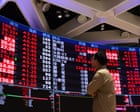
Asia-Pacific markets rally as Huang’s return to Nvidia reignites AI trade, despite US political backlash – business live
The full article is on the original publisher site.
AI insight
AI-generated
Jensen Huang's return as CEO of Nvidia has triggered a significant rally across Asia-Pacific stock markets and saw Nvidia's shares surge on Wall Street. This market enthusiasm occurs despite considerable political opposition in the US, with Democratic and Republican lawmakers criticizing the reinstatement.
Jensen Huang's return reignites market confidence in the AI sector, translating into a significant demand spike for high-performance computing hardware (Nvidia GPUs). This positive sentiment drives strong capital inflows and market rallies across Asia-Pacific.
Key Insights
- Asia-Pacific markets experienced rallies, including surges in Taiwan, South Korea, Japan, and Australia, following Huang's return.
- Nvidia's stock value increased substantially on Wall Street after Huang was reinstated as CEO.
- Analysts suggest Huang's return provides strategic continuity and reduces uncertainty for Nvidia's operations.
- The reinstatement faces political pushback, with Senator Elizabeth Warren questioning Nvidia's compliance with export controls.
- Republican senators have also criticized the decision, citing concerns over Huang's past conduct.
Global technology firms are expected to see a short-term revenue uplift (3-7%) within 48 hours, driven by immediate market confidence in AI infrastructure. Key risk: The uplift is primarily sentiment-driven and may not translate into immediate realized revenue.
Sign in to see all sector verdicts, full thesis and counter-argument debate.
Sector impact at a glance
- Global TechnologyMid term (1–4 weeks)
AI infrastructure providers will see sustained demand visibility over the next 1-4 weeks, though immediate revenue realization is unlikely due to long enterprise procurement cycles. Key risk: The timeline for revenue realization is significantly longer than projected.
Thesis
Accelerated AI infrastructure investment cycles lead to sustained enterprise spending (capex_cycle). Affected: AI infrastructure, data center hardware. Expected impact: Sustained demand visibility for ecosystem players (volume up). Window: 1-4 weeks cumulative. Scarcity: Low, but delivery delays are likely for large-scale deployments.
Antithesis
The mid-term thesis is significantly constrained because large-scale enterprise AI infrastructure deployment involves lengthy procurement, budgeting, and integration cycles, making a 1-4 week cumulative revenue spike unrealistic.
- Global TechnologyShort term (1–2 days)
Global technology firms are expected to see a short-term revenue uplift (3-7%) within 48 hours, driven by immediate market confidence in AI infrastructure. Key risk: The uplift is primarily sentiment-driven and may not translate into immediate realized revenue.
Thesis
Jensen Huang's return triggers a strong demand spike for AI infrastructure and related services (demand_spike). Affected: AI infrastructure, high-performance computing solutions. Expected impact: 3-7% short-term revenue uplift for cloud/AI providers (revenue up). Window: 48h reflex. Scarcity: No, but competitive pressure on specialized talent is rising.
- SemiconductorsMid term (1–4 weeks)
Chip manufacturers should realize sustained order flow and moderate margin improvement over the next 2-4 weeks due to accelerating infrastructure investment. Key risk: Margin expansion is constrained by competitive pricing and cost control.
Thesis
The AI infrastructure investment cycle accelerates due to market confidence (capex_cycle). Affected: AI GPUs, HPC chips. Expected impact: Moderate margin expansion and sustained order flow (margin expansion). Window: 2-4 weeks cumulative. Scarcity: Low, but lead times for advanced nodes will tighten significantly.
Antithesis
The aggressive margin band is not supported by historical precedent, as margin expansion depends heavily on pricing power and cost control, which may be eroded by competitive pressure.
- SemiconductorsShort term (1–2 days)
AI GPUs and HPC chips are expected to see accelerated order flow and positive sentiment within the next 48 hours, driven by renewed market confidence. Key risk: The immediate surge reflects valuation, not realized revenue.
Thesis
Renewed leadership confidence drives a sudden demand spike for AI GPUs and HPC chips (demand_spike). Affected: AI GPUs, HPC chips. Expected impact: 5-10% immediate order flow acceleration for suppliers (volume up). Window: 48h reflex. Scarcity: Low, but capacity utilization is rapidly increasing.
Antithesis
The short-term thesis is moderated because stock price surges reflect investor sentiment and future expectations (valuation), not immediate realized revenue, which requires confirmed orders and subsequent billing.
- S&P TechnologyMid term (1–4 weeks)
High-growth technology stocks are expected to maintain valuation support over the next 2-4 weeks due to sustained capital inflows. Key risk: Capital inflows affect valuation, but do not automatically translate into operational margin expansion.
Thesis
The sustained AI infrastructure investment cycle attracts continuous capital inflows (demand_spike). Affected: AI-focused equities, high-performance computing stocks. Expected impact: Stable valuation support for leading firms (margin expansion). Window: 2-4 weeks cumulative. Scarcity: Low, but market saturation risk increases over time.
Antithesis
Capital inflows primarily affect valuation (stock price) and liquidity, not necessarily the operational margins of the underlying companies; margin expansion requires volume or cost reduction.
- S&P TechnologyShort term (1–2 days)
AI-focused equities are projected to gain a valuation premium of 5-10% within 48 hours, reflecting renewed investor confidence. Key risk: The gains are purely sentiment-driven and do not guarantee operational performance.
Thesis
Major leadership changes in high-growth tech firms correlate with renewed investor confidence (demand_spike). Affected: AI-focused equities, high-growth tech stocks. Expected impact: 5-10% immediate valuation premium increase (revenue up). Window: 48h reflex. Scarcity: None, this is a sentiment-driven financial reaction.
Affected products & commodities
- AI GPUs
- High-performance computing chips
Supply-chain signals
- AI infrastructure investment cycle
- Semiconductor capacity utilization
Claims Assessed
- VerifiableHuang's return to Nvidia has caused a strong rally in Asia-Pacific stock markets.
- VerifiableNvidia's shares rose by 31.5% on Wall Street after Huang returned to the company.
- VerifiableSenator Elizabeth Warren has criticized Huang's reinstatement as reckless and plans to investigate export control compliance.
- VerifiableDonald Trump's White House was involved in pressuring Nvidia to bring Huang back.
Missing Context
The article does not detail the specific nature of the alleged affair mentioned by Republican senators, nor does it provide further context on the specific 'Liberation Day tariffs' mentioned in relation to Donald Trump's past actions.
This analysis would be wrong if
If concrete data shows that enterprise AI infrastructure deployment timelines are significantly delayed beyond the quarter mark, or if semiconductor suppliers fail to secure confirmed, large-scale off-take agreements.
Historical parallels
- Major leadership changes in high-growth tech firms often correlate with renewed investor confidence and subsequent acceleration in demand cycles.