economictimes.indiatimes.com ·
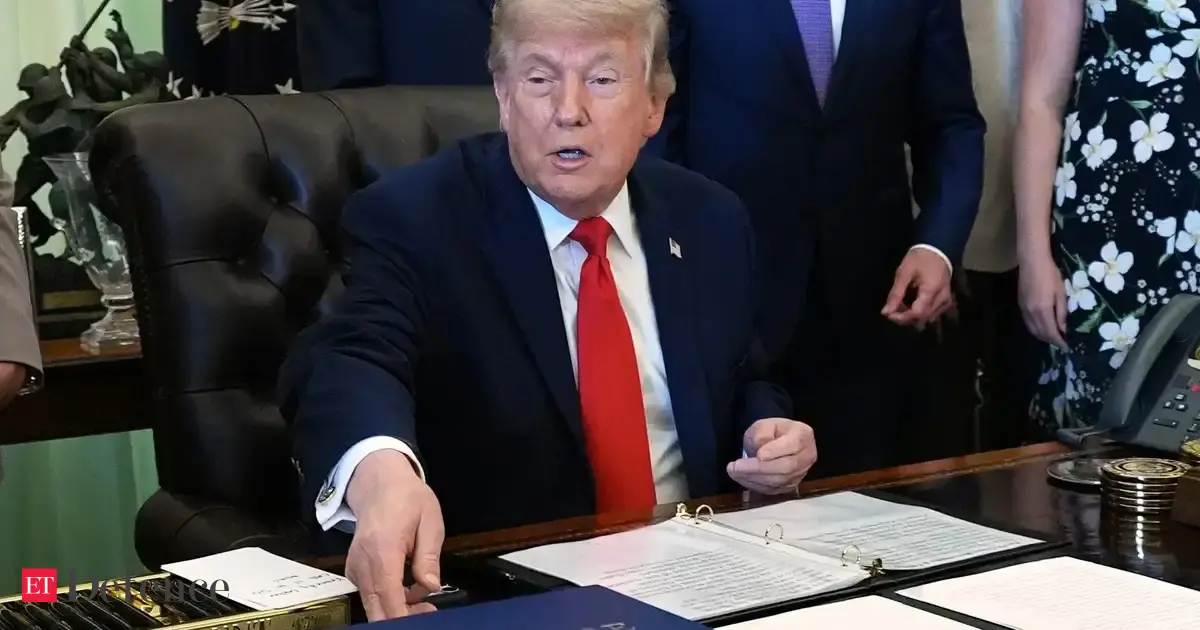
Inside the Chaotic Iran Talks That Let Trump Claim Victory but Not Yet Peace
News Analysis — AI Analysis
Original analysis generated by News Analysis. This is our own commentary on the story, not the publisher's article text.
The article describes the chaotic final stages of negotiations aimed at ending the Iran conflict, culminating in President Trump announcing a deal via social media. While this announcement suggested an immediate opening of the Strait of Hormuz and end to hostilities, the piece notes that the formal details regarding nuclear issues, sanctions, and Lebanon were still pending. The talks faced significant turbulence, including an Israeli bombing raid on Beirut which Trump publicly criticized. Despite these setbacks, mediators successfully pushed forward a framework deal promising oil waivers and potential reconstruction funds for Iran.
Key points
- President Trump announced the completion of a deal with Iran via social media, declaring the Strait of Hormuz open and authorizing the removal of the US naval blockade.
- The negotiations were highly volatile, notably interrupted by an Israeli bombing in Beirut, which Trump publicly criticized as undermining the talks.
- The proposed framework deal included potential sanctions relief for Iran, immediate oil waivers, and a possible $300 billion reconstruction fund backed by Gulf money.
- Key details concerning nuclear weapons, sanctions, and Lebanon were not finalized or released at the time of the announcement.
- Qatari mediators played a crucial role in Tehran, conducting intensive shuttle diplomacy over four weeks to facilitate discussions between Iranian and American officials.
Claims assessed
- VerifiableDonald Trump announced via social media that the deal with Iran was complete, opening the Strait of Hormuz and removing the US naval blockade.
- VerifiableThe negotiations were delayed by several hours due to an Israeli bombing raid on Beirut.
- VerifiableThe deal framework included provisions for immediate oil waivers, sanctions relief, and a potential $300 billion reconstruction fund for Iran.
- UnverifiedThe talks successfully resolved all major outstanding issues, including nuclear weapons and Lebanon.
Missing context
The article does not specify which specific international agreements or previous treaties (like the JCPOA mentioned in passing) this new deal aims to replace or improve upon, nor does it detail the current geopolitical stance of key regional players beyond Iran and Israel.
Topic context
The full article is on the original publisher site.
AI insight
AI-generatedGeopolitical de-escalation is expected to cause a moderate reduction in global energy risk premiums, pushing Crude Oil and related freight/insurance rates down short-term. Main risk: The magnitude of the decline is constrained by fundamental supply/demand factors (OPEC+ cuts) which may override temporary geopolitical relief.
The announcement centers on geopolitical de-escalation (Iran/Strait of Hormuz), which directly affects global energy supply and commodity pricing. The lifting of a blockade would reduce input cost uncertainty for global shipping and crude oil, potentially easing inflation pressure in the U.S., though the deal's pending status suggests continued volatility.
Signals our AI researcher identified
Extracted by our AI model from this article and related public sources — not direct quotes from the publisher.
- Trump announced a deal to end the Iran War.
- The Strait of Hormuz is expected to reopen and U.S. naval blockade lifted.
- Negotiations involved sanctions relief and Iran's nuclear program.
- Israel bombed southern Beirut, complicating talks.
- Conflict had significant economic impacts, including rising oil prices and inflation in the U.S.
Affected products & commodities
- Crude Oil (Global)
- Oil Freight/Insurance
- Inflationary inputs
Supply-chain signals
- Strait of Hormuz transit stability
- U.S. naval blockade status
Historical parallels
- Geopolitical tensions in the Persian Gulf (e.g., Houthi attacks, Strait closures) typically cause immediate spikes in Brent/WTI crude prices and insurance premiums due to perceived supply disruption.
This analysis would be wrong if
If physical supply constraints (e.g., refinery outages, OPEC quotas) or sustained localized conflict flare-ups are confirmed, the downward correction will be immediately negated.
Crude Oil benchmarks are expected to stabilize over the next 1-4 weeks as market pricing adjusts to reduced geopolitical risk. Key risk: Persistent regional political instability could prevent full normalization.
Sign in to see all sector verdicts, full thesis and counter-argument debate.
Sector impact at a glance
- COMMODITY_OILmid
- COMMODITY_OILshort
- GLOBAL_ENERGYmid
- GLOBAL_ENERGYshort
Related stories

hindustantimes.com
US Iran War Live Updates Peace Deal Trump Pezeshkian Geneva G7 Pakistan Hormuz Strait Oil Prices Tehran Latest News

rte.ie
1579024 us iran middle east
thedailystar.net
Trump Irans President Sign Deal End Mideast War

oann.com
G7 Summit Trump Commands Global Stage With Viral Im the Boss Greeting
businesstimes.com.sg