AI-generated analysis · Source: theguardian.com · How we produce it
theguardian.com · · GB
Several companies are using Trump tariff refunds for corporate bonuses
The full article is on the original publisher site.
AI insight
AI-generated
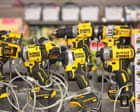
An investigation by ProPublica revealed that several companies receiving refunds from Trump-era tariffs are allocating the funds toward corporate bonuses and executive compensation rather than reimbursing consumers. Companies like Stanley Black & Decker and TJMaxx publicly claimed that tariffs forced them to raise prices, but their financial disclosures indicate the refunds are partially used for leadership incentives.
The regulatory mechanism of tariff refunds is being utilized by companies for internal corporate compensation rather than being passed through to consumers. This financial utilization dampens the expected consumer price deflationary effect, impacting pricing power and consumer benefit.
Key Insights
- ProPublica identified at least nine companies that are directing tariff refunds toward corporate leadership.
- Stanley Black & Decker and TJMaxx are cited as examples of companies using refund money for bonuses.
- The refunds are the result of a Supreme Court ruling that deemed Trump's tariffs unlawful.
- The Trump administration has issued at least $100 billion in refunds to companies since August.
- Research indicates that tariffs have already increased consumer prices, with 26% of tariff increases passing through to consumers.
Margin compression risk increases for industrial hardware over the mid-term as cost benefits are internalized by firms.
Sign in to see all sector verdicts, full thesis and counter-argument debate.
Sector impact at a glance
- Global IndustrialsMid term (1–4 weeks)
Margin compression risk increases for industrial hardware over the mid-term as cost benefits are internalized by firms.
Thesis
The internal compensation usage of tariff refunds affects industrial tools and hardware, resulting in margin compression risk (approx. 25-50bps) over 2-3 weeks.
Antithesis
The full margin compression risk is likely overstated; some firms may mitigate the pressure by using refund funds to cut operational costs and passing on a portion of the savings.
- Global IndustrialsShort term (1–2 days)
Industrial tools and hardware pricing power remains constrained in the short term, showing limited immediate movement.
Thesis
The regulatory refund mechanism, utilized for internal corporate bonuses, suppresses expected consumer price deflationary effects, leading to flat margin pressure (1-3% range) over 48h.
Antithesis
The assumption of uniform corporate behavior is weak; some firms may use refund funds to aggressively cut operational costs and pass on partial savings, mitigating the full margin pressure.
- Retail & E-commerceMid term (1–4 weeks)
Retailers face margin pressure over the mid-term as cost savings are not realized through immediate consumer price drops.
Thesis
The dampened pass-through of tariff refunds affects consumer goods, leading to margin compression risk (approx. 25-50bps) over 3-6 weeks.
Antithesis
The realized margin pressure will be staggered and dependent on individual company fiscal reporting and decision timelines, slowing the cumulative impact beyond the initial 2-3 week window.
- Retail & E-commerceShort term (1–2 days)
Consumer goods pricing power remains constrained in the short term, showing limited immediate movement.
Thesis
The regulatory refund mechanism, utilized for internal compensation, suppresses expected deflationary effects on consumer goods, resulting in flat pricing power (1-2% range) over 48h.
Affected products & commodities
- Consumer goods
- Industrial tools and hardware
Supply-chain signals
- Tariff policy implementation
- Regulatory refund mechanism
Claims Assessed
- VerifiableProPublica found that companies receiving tariff refunds are using some of the money for corporate bonuses instead of consumer reimbursement.
- VerifiableStanley Black & Decker is expected to receive at least $298 million in tariff reimbursements, some of which will be used for bonuses.
- VerifiableThe Supreme Court ruled that Trump’s 'Liberation Day' tariffs were illegal because they exceeded his executive authority.
- VerifiableThe New York Federal Reserve estimates that 26% of tariff increases are ultimately passed on to consumer prices.
- VerifiableThe Trump administration has refunded at least $100 billion to companies since August.
Missing Context
The article does not specify the full legal details of the Supreme Court ruling, nor does it provide a comprehensive list of all companies receiving the refunds.
This analysis would be wrong if
If companies decide to aggressively pass on tariff savings to consumers, or if the regulatory mechanism is altered to mandate consumer benefit distribution.
Historical parallels
- Tariff/subsidy refunds have historically led to price pass-through or margin expansion, but this specific utilization for bonuses negates that consumer benefit.