www.rte.ie · · IE
1578042 iran trump us

News Analysis — AI Analysis
Original analysis generated by News Analysis. This is our own commentary on the story, not the publisher's article text.
US President Donald Trump announced at the White House that he had reached a 'great settlement' with Iran, suggesting a peace deal could reopen the Strait of Hormuz as soon as the weekend. However, Iranian officials countered this claim, stating that while much text was finalized, they had not reached a final conclusion and would not compromise on their core demands. The article provides background details on the ongoing conflict, including US military actions and Iran's key negotiating points.
Key points
- Trump claimed to have achieved a 'great settlement' with Iran, suggesting an imminent peace deal that would reopen the Strait of Hormuz.
- Iranian spokespersons stated that negotiations were not finalized, emphasizing that they maintain non-negotiable red lines.
- The conflict, which began in late February, has caused significant casualties and sharply increased global energy prices.
- Iran's primary demands include lifting international sanctions, releasing frozen assets, and gaining recognition of its control over the Strait of Hormuz.
- Trump repeatedly stressed that any peace deal must prevent Iran from developing nuclear weapons.
Claims assessed
- UnverifiedThe US and Iran could sign a peace deal as soon as this weekend, reopening the Strait of Hormuz to shipping.
- VerifiableIran has not reached a final decision on an agreement with the United States regarding the conflict settlement.
- VerifiableThe war, which started in late February, has resulted in thousands of deaths and caused global energy prices to rise sharply.
- VerifiableTrump stated that the US would hit Iran 'very hard tonight' and wanted to seize Kharg Island, which handles 90% of Iran's oil exports.
Missing context
A reader would need to know the specific details of the 'red lines' Iran is unwilling to compromise on, beyond just listing sanctions and asset release. Furthermore, the long-term geopolitical implications of a potential peace deal—such as changes in regional power dynamics or US military presence—are not discussed.
Topic context
The full article is on the original publisher site.
AI insight
AI-generatedPotential de-escalation in the Persian Gulf is unlikely to cause a sharp dip in crude oil/LNG spot prices within 48 hours (Magnitude 1). The most robust signal is that energy-importing EM currencies may see a modest uplift (Magnitude 2) due to improved trade sentiment. Main risk: If global interest rate trends or domestic policy risks prove stronger than temporary geopolitical relief, the positive currency and margin effects will be muted.
The news discusses a potential diplomatic settlement between the US and Iran. If realized, reopening the Strait of Hormuz would significantly reduce geopolitical risk premiums for global energy transit, primarily affecting oil and LNG shipping costs and stabilizing crude commodity prices. The immediate commercial impact is speculative, tied to future political actions rather than current market mechanics.
Signals our AI researcher identified
Extracted by our AI model from this article and related public sources — not direct quotes from the publisher.
- US President Donald Trump mentioned potential peace deal between US and Iran.
- Potential agreement could reopen the Strait of Hormuz to shipping.
- The article is dated June 12, 2026.
Affected products & commodities
- Crude Oil (Brent/WTI)
- Liquefied Natural Gas (LNG)
Supply-chain signals
- Strait of Hormuz shipping routes
- Global energy transit risk premium
Historical parallels
- Past de-escalation announcements in the Persian Gulf region typically lead to a sharp reduction in geopolitical risk pricing (WTI/Brent), often resulting in temporary price dips or stabilization.
This analysis would be wrong if
If OPEC+ announces significant production increases, or if US SPR releases show sufficient buffers that negate any perceived immediate shock removal.
Sustained stability in global energy and trade routes will moderately improve export prospects for EM nations over the next 2-4 weeks. However, this benefit is constrained by global interest rate cycles.
Sign in to see all sector verdicts, full thesis and counter-argument debate.
Sector impact at a glance
- EM_MARKETSmid
- EM_MARKETSshort
- GLOBAL_ENERGYmid
Related stories
economictimes.indiatimes.com
Spacex IPO Makes Elon Musk the Worlds First Trillionaire
dealstreetasia.com
Elon Musk Is Worlds First Trillionaire Following Spacex IPO
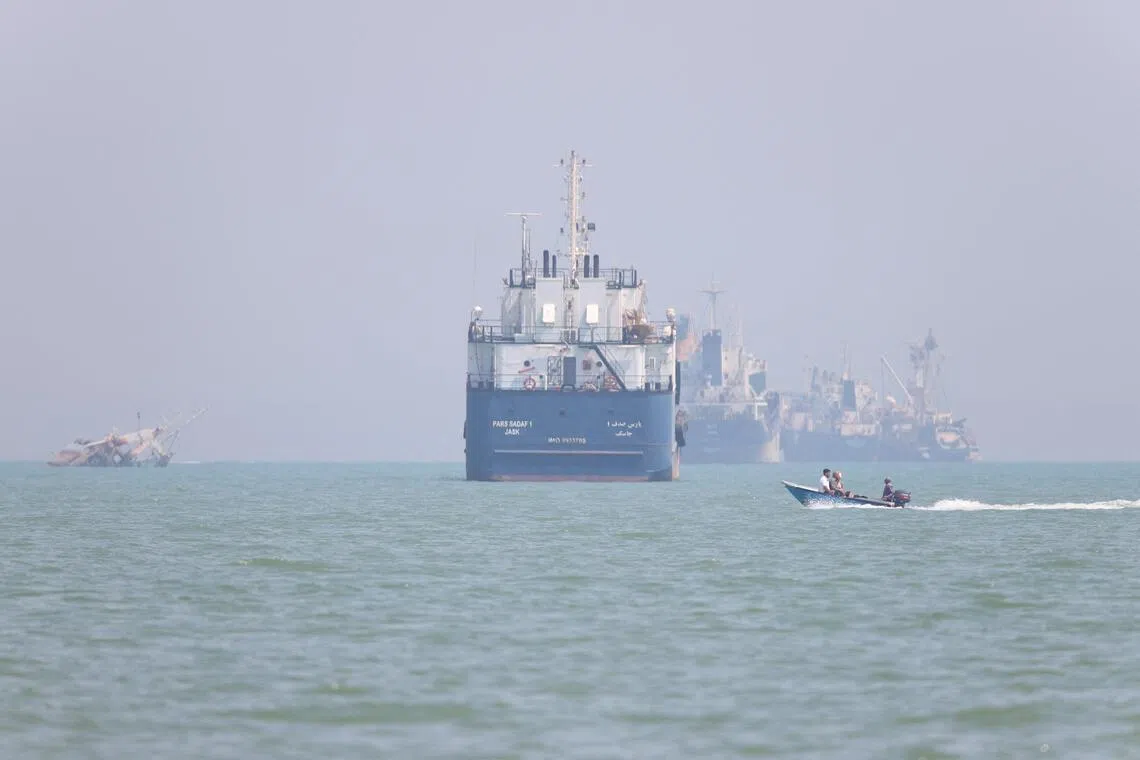
straitstimes.com
Iran Says No Final Decision Made on Deal That Trump Hopes Could Be Signed Soon

punchng.com
Nnpc Reports 24 Pipeline Theft Incidents Since 2025

nzherald.co.nz