www.dailymaverick.co.za · · ZA
2026 06 18 us and iran presidents sign ceasefire agreement but trump says he could still resume attacks
/file/attachments/orphans/GettyImages-2275744077_293483.jpg)
News Analysis — AI Analysis
Original analysis generated by News Analysis. This is our own commentary on the story, not the publisher's article text.
The US and Iran signed an interim agreement through which their presidents extended a ceasefire by 60 days, aiming to negotiate a permanent truce and usher in Middle Eastern peace. The deal includes lifting sanctions, unfreezing billions of Iranian assets, resuming maritime traffic in the Strait of Hormuz, and establishing a $300 billion reconstruction fund for Iran. However, US President Trump warned that renewed attacks would occur if either side fails to uphold their commitments.
Key points
- The 14-point agreement extends the existing ceasefire by an additional 60 days across all fronts, including Lebanon.
- Key provisions of the deal include lifting U.S. sanctions and unfreezing billions of dollars in Iranian assets.
- The memorandum mandates the full resumption of maritime traffic through the Strait of Hormuz without charges.
- A $300 billion investment fund has been established for Iran's post-war reconstruction efforts.
- Iran committed to not building nuclear weapons, reaffirming a long-standing vow.
Claims assessed
- VerifiableThe US and Iranian presidents signed an interim agreement aimed at ending their war on Wednesday.
- VerifiableThe deal includes the lifting of U.S. sanctions, unfreezing Iranian assets, and allowing full maritime traffic in the Strait of Hormuz.
- VerifiableUS President Trump stated that if Iran violates the agreement, he would resume bombing attacks.
- VerifiableThe conflict began on February 28 when the US and Israel assassinated Supreme Leader Ayatollah Ali Khamenei.
Missing context
The article does not specify which US or Iranian officials were responsible for the initial assassination mentioned in the conflict's start date, nor does it detail the specific terms or conditions attached to the $300 billion reconstruction fund.
Topic context
The full article is on the original publisher site.
AI insight
AI-generatedUS/Iran de-escalation boosts regional stability, pushing Oil/Gas commodities and industrial goods prices moderately higher (2-4%) over the medium term. Key risk: The realization of these gains is highly contingent on physical infrastructure buildout time and overcoming bureaucratic hurdles, rather than just fund announcements.
The signing of a major ceasefire and economic agreement between the US and Iran signals a significant de-escalation, primarily affecting FX pass-through (FX_EM) for Iranian assets and potentially easing sanctions risk. The $300 billion investment fund suggests renewed capital flow into Iran's reconstruction (EM_INDUSTRIALS), which could stabilize local markets but remains vulnerable to Trump's stated threat of military action.
Signals our AI researcher identified
Extracted by our AI model from this article and related public sources — not direct quotes from the publisher.
- Ceasefire agreement signed between US and Iran (June 18, 2026)
- Agreement includes lifting of US sanctions on Iran
- $300 billion investment fund for Iranian reconstruction
- Ceasefire extended by 60 days
- Trump warned of potential military action if terms are violated
Affected products & commodities
- Iranian assets
- Energy commodities (Oil/Gas)
- Investment capital
Supply-chain signals
- US sanctions regime on Iran
- Regional stability in the Middle East
Historical parallels
- Major geopolitical de-escalation agreements typically lead to short-term volatility and a potential rebound in commodity prices (e.g., Brent/WTI) due to reduced supply risk, followed by stabilization as trade routes reopen.
This analysis would be wrong if
If concrete project timelines, verifiable cost disbursements, or sustained trade volume recovery data are not published to support the expected capital flow.
Industrial goods are expected to see a moderate price increase of 3-5% over the next month. The key risk is that structural demand spikes must overcome potential supply bottlenecks and local inflation.
Sign in to see all sector verdicts, full thesis and counter-argument debate.
Sector impact at a glance
- EM_INDUSTRIALSmid
- EM_INDUSTRIALSshort
- FX_EMshort
- GLOBAL_ENERGYmid
- GLOBAL_ENERGYshort
Related stories
kurier.at
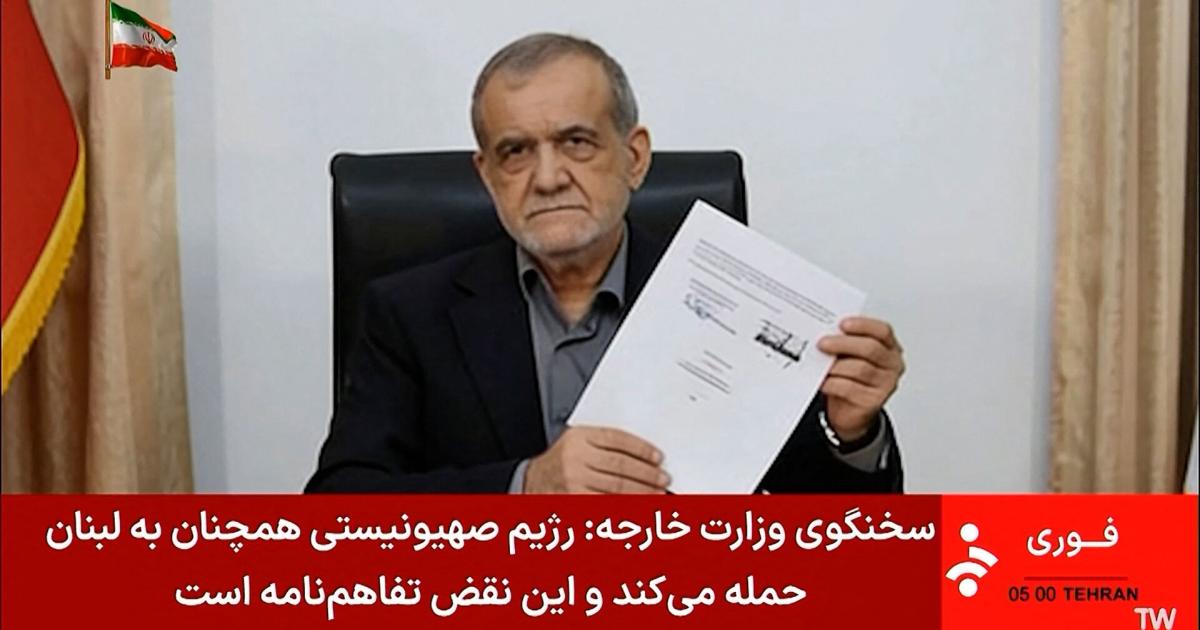
Iran Krieg Israel USA Angriff Nahostkrieg Livebericht 18 Juni

businesstimes.com.sg
Focus Turns Strait Hormuz After US and Iran Presidents Sign Ceasefire Agreement
abc.net.au
Federal Government 430m Water Buyback Murray Darling Basin
e-flux.com
E Flux Journal Issue 164
thenationalnews.com