economictimes.indiatimes.com ·
US Stock Market Warsh Faces Key Test as New Fed Chair Amid Inflation Concerns
News Analysis — AI Analysis
Original analysis generated by News Analysis. This is our own commentary on the story, not the publisher's article text.
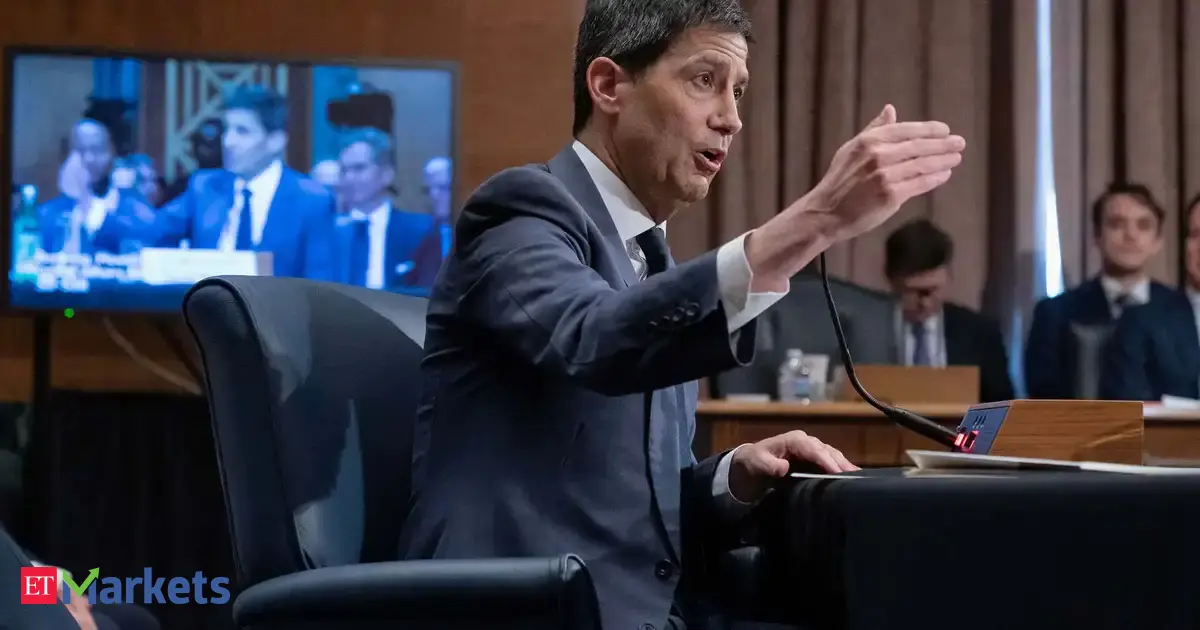
Federal Reserve Chair Kevin Warsh's debut policy meeting is highly anticipated as markets await clues regarding the future direction of U.S. interest rates amid persistent inflation concerns. The Fed is expected to keep benchmark rates stable while potentially revising its economic forecasts, signaling a cautious approach to monetary policy. Observers will also watch how Warsh addresses communication practices and structural economic themes.
Key points
- Warsh's first post-meeting news conference is crucial for providing guidance on navigating the challenging economic environment.
- Inflation remains elevated at 4.2%, driven by energy costs, while a resilient labor market has reduced immediate pressure for rate cuts.
- The Fed is widely expected to maintain its current benchmark interest rate and may revise forecasts away from anticipated rate cuts in 2026.
- Warsh is expected to adopt a leadership style favoring internal debate and focusing on long-term structural issues like AI, rather than frequent public commentary.
- Market participants are anticipating changes in the Fed's language, moving toward a more balanced stance that acknowledges potential rate increases.
Claims assessed
- VerifiableThe Federal Reserve is widely expected to leave its benchmark interest rate unchanged at approximately 3.6%.
- VerifiableInflation has climbed to a three-year high of 4.2%, largely due to elevated energy prices.
- VerifiableEconomists anticipate policymakers will revise earlier forecasts that pointed to a rate cut this year, suggesting rates may remain unchanged through the remainder of 2026.
- VerifiableWarsh favors fewer public speeches by Fed officials and greater emphasis on internal debate.
Missing context
The article does not provide the specific economic data or rationale that led to the current consensus of a rate hold; it only reports on the expectation itself.
Topic context
Related topics
The full article is on the original publisher site.
AI insight
AI-generatedPersistent high inflation and stable US rates pressure global lending profitability across banking sectors (GLOBAL_BANKING/SP500_FINANCIALS), leading to margin compression. Key risk: The full magnitude of this cost pass-through is mitigated by banks' ability to adjust pricing models and the structural resilience of corporate investment demand.
The primary mechanism is monetary policy uncertainty driven by high inflation (4.2%). The Federal Reserve's guidance on future interest rates directly impacts the cost of capital and corporate borrowing costs across sectors, particularly affecting financial institutions (GLOBAL_BANKING, SP500_FINANCIALS) and emerging markets due to potential currency pass-through (FX_EM).
Signals our AI researcher identified
Extracted by our AI model from this article and related public sources — not direct quotes from the publisher.
- Inflation reached 4.2% (three-year high)
- Fed Chair Kevin Warsh leads first meeting on Wednesday
- Expected interest rate: unchanged at approximately 3.6%
- Analysts anticipate stable rates through 2026
Affected products & commodities
- Interest Rates
- Cost of Capital
- Credit Availability
Supply-chain signals
- Global liquidity conditions
- Corporate borrowing costs
Historical parallels
- When inflation spikes and central banks signal rate hikes (e.g., 2022), bond yields rise, increasing corporate debt servicing costs and slowing investment cycles.
This analysis would be wrong if
If major global commodity price cycles or local central bank interventions provide a material, immediate counter-signal that overrides the systemic macro pressure from US interest rate guidance.
Elevated US rates and structural de-dollarization efforts will increase refinancing risk for EM sovereigns and corporations.
Sign in to see all sector verdicts, full thesis and counter-argument debate.
Sector impact at a glance
- EM_MARKETSmid
- GLOBAL_BANKINGmid
- GLOBAL_BANKINGshort
- SP500_FINANCIALSmid
- SP500_FINANCIALSshort
Related stories
economictimes.indiatimes.com
Durable US Iran Peace Deal to Provide Predictable Environment for Trade Crf

stockandland.com.au
Vicgrid Guidelines Farmers Slam False Engagement Claims
economictimes.indiatimes.com
Rupee Inches Up Iran Deal Longevity Worries and Hedging Drag

nzherald.co.nz
Pike River Families Sound Warning as Health and Safety Bill Moves Closer

lbc.co.uk