en.dailypakistan.com.pk · · PK
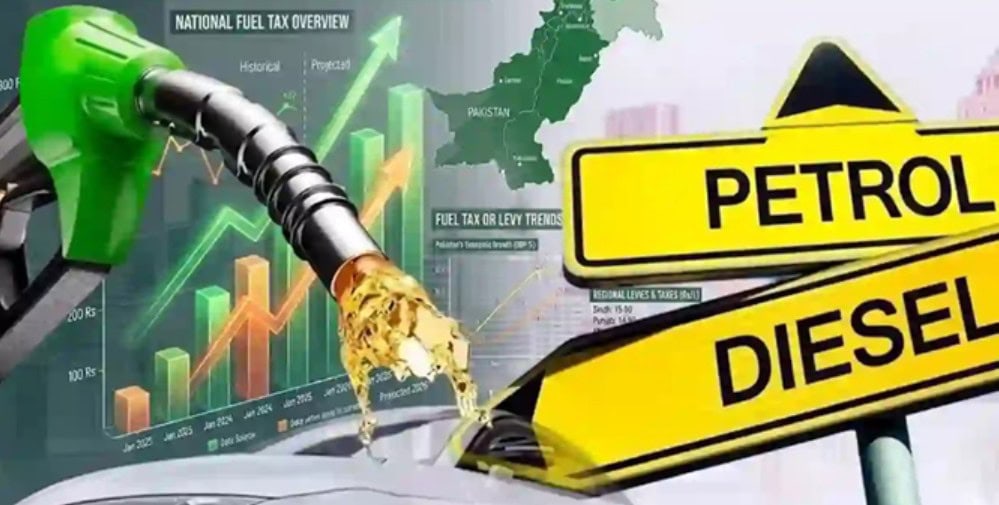
Petrol Levy in Pakistan Goes Down by Rs9 Per Litre Diesel Jumps Amid Fuel Revision
News Analysis — AI Analysis
Original analysis generated by News Analysis. This is our own commentary on the story, not the publisher's article text.
The Pakistani government revised petroleum levies and fuel charges, resulting in a reduction of the petrol levy by Rs9.34 per litre, but this relief was offset by an increase in the high-speed diesel levy by Rs8.67 per litre. While some transportation-related costs were slightly eased through adjustments in freight margins, overall inflationary pressure on commuters and businesses remains elevated due to sustained high fuel prices.
Key points
- The petroleum levy on petrol was reduced from Rs116.08 to Rs106.74 per litre (a decrease of Rs9.34).
- Conversely, the levy on high-speed diesel increased significantly from Rs44.59 to Rs53.26 per litre (an increase of Rs8.67).
- Adjustments were made in freight margins, with petrol reduced by Rs4.45 and high-speed diesel cut by Rs2.01.
- Incidental charges on petrol surged by Rs9.30 per litre, while those on high-speed diesel decreased by Rs9.57 per litre.
- Despite the changes, the dealer's margin for both fuel types was kept constant at Rs8.64 per litre.
Claims assessed
- VerifiableThe petroleum levy on petrol has been reduced by Rs9.34 per litre, bringing it down from Rs116.08 to Rs106.74 per litre.
- VerifiableThe levy on high-speed diesel was increased by Rs8.67 per litre, raising it from Rs44.59 to Rs53.26 per litre.
- VerifiablePetrol is currently being sold at Rs 373.78 per litre, and diesel is priced at Rs 378.78 per litre as of June 14, 2026.
- VerifiableThe overall fuel price revision indicates sustained pressure on transportation costs, keeping inflationary concerns high for the general public and businesses.
Missing context
The article does not specify the underlying reasons for these specific adjustments in levies (e.g., global oil price fluctuations, government revenue targets, or tax policy shifts), which would provide crucial context for understanding the economic rationale behind the changes.
Topic context
Related topics
The full article is on the original publisher site.
AI insight
AI-generatedThe differential diesel levy hike pushes freight rates and industrial input costs 2-3% higher within the short term, while fuel distribution margins face mixed signals. Key risk: The immediate cost pass-through is dampened by inventory buffers in industry and phased rate adjustments in transport.
The Pakistani government revised petroleum levies and freight margins. The reduction in the levy on petrol (Rs9.34) partially offsets the increase in the high-speed diesel levy (Rs8.67). This differential pricing structure increases input costs for transport services reliant on diesel, while slightly easing overall transportation costs due to reduced freight margins. The net effect is inflationary pressure driven by higher diesel component costs.
Signals our AI researcher identified
Extracted by our AI model from this article and related public sources — not direct quotes from the publisher.
- Petrol levy reduced by Rs9.34 per litre.
- Diesel levy increased by Rs8.67 per litre.
- Freight margin reduction: Petrol -Rs4.45, Diesel -Rs2.01.
- Current petrol price: Rs373.78 per litre.
- Current diesel price: Rs378.78 per litre.
Affected products & commodities
- Petrol
- High-speed Diesel (HSD)
Supply-chain signals
- Pakistani fuel distribution network pricing adjustments
Historical parallels
- Fuel levy changes typically lead to immediate, localized price pass-throughs in consumer goods and logistics services (e.g., increased cost of transport for agricultural inputs or manufactured goods).
This analysis would be wrong if
If large industrial players or logistics providers announce significant temporary price absorption measures (e.g., fixed rates for 30 days) due to market competition, the short-term upward pressure will be significantly mitigated.
Sustained diesel cost inflation will maintain upward pressure on freight rates and logistics margins over the next month.
Sign in to see all sector verdicts, full thesis and counter-argument debate.
Sector impact at a glance
- EM_ENERGYmid
- EM_INDUSTRIALSmid
- EM_INDUSTRIALSshort
- EM_TRANSPORTmid
- EM_TRANSPORTshort
Related stories
economictimes.indiatimes.com
Petrol Diesel Prices on June 14 Check Latest Rates in Delhi Mumbai Bengaluru and Other Cities
yahoo.com
Russia Overwhelming Manpower Advantage Against

elpais.com
El Caso Zapatero Pone Al Gobierno Al Limite De La Resistencia

leprogres.fr
Manque De Logement Social Quelles Communes Sont Les Plus Sanctionnees

irishtimes.com