www.straitstimes.com ·
US Military Says Carrying Out Self Defence Strikes Against Iran
News Analysis — AI Analysis
Original analysis generated by News Analysis. This is our own commentary on the story, not the publisher's article text.
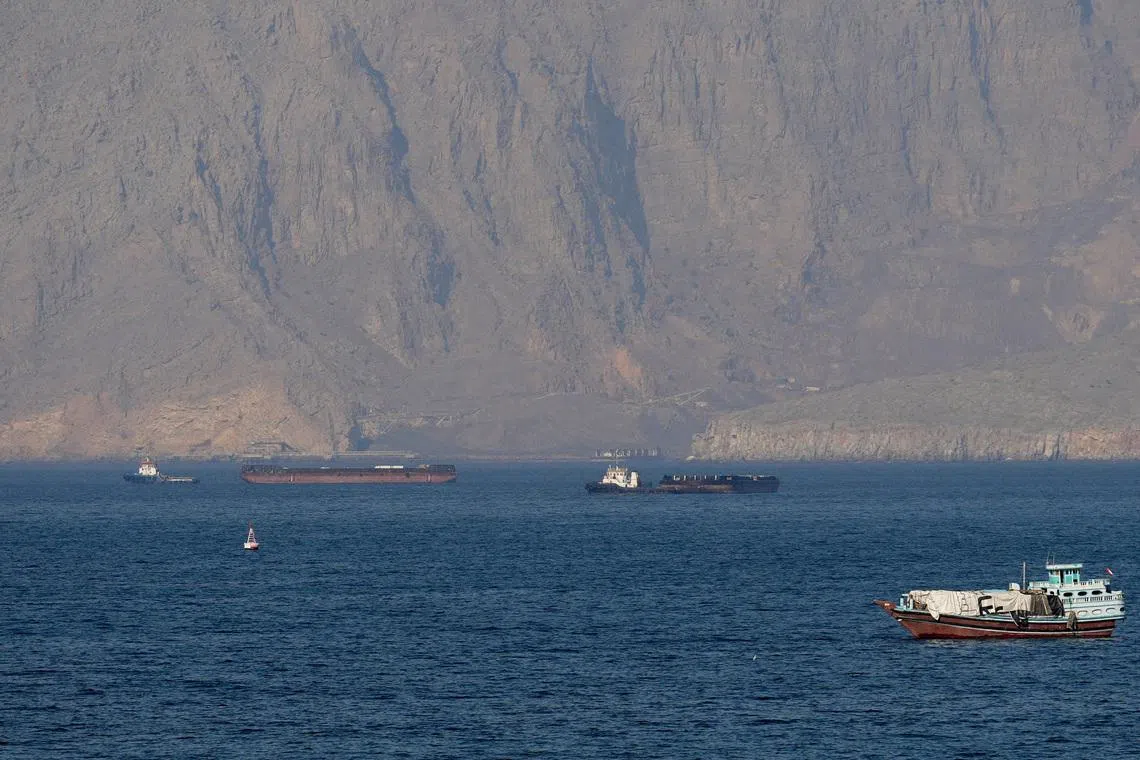
Following recent U.S. military strikes against Iran, which were described as self-defense measures, Iran's military command announced the closure of the Strait of Hormuz. Tehran stated that any vessel attempting passage through the strategic waterway would be targeted, citing repeated violations of a ceasefire by American forces. The U.S. Central Command disputed this claim, asserting that commercial shipping continued to transit normally.
Key points
- Iran's military command declared the Strait of Hormuz closed and warned that any passing vessel would be shot at.
- The declaration followed a new wave of U.S. strikes against Iranian targets in response to failed peace talks.
- Iranian forces reported launching counter-attacks on 18 U.S. military sites in Kuwait and Bahrain.
- U.S. Central Command refuted the closure claim, stating that commercial ships continued transiting through the Strait of Hormuz.
- The conflict escalated after President Trump vowed to hit Iran hard, claiming negotiations were stalled.
Claims assessed
- VerifiableIran's military command announced it would target any ship attempting passage through the Strait of Hormuz due to recent U.S. strikes.
- VerifiableThe United States launched additional self-defense strikes against Iran after President Trump accused Tehran’s negotiators of stalling peace talks.
- VerifiableIran's Revolutionary Guards reported hitting two vessels that were attempting to illegally pass through the Strait of Hormuz.
- VerifiableU.S. Central Command stated that commercial ships continued transiting in and out of the Strait of Hormuz despite Iran’s claims.
Missing context
The article does not provide details regarding the specific nature or scope of the 'interim peace deal' that President Trump referenced, nor does it offer independent verification of the claimed missile strikes (e.g., Tomahawk missiles) or the extent of the alleged damage to Iranian infrastructure.
Topic context
The full article is on the original publisher site.
AI insight
AI-generatedGeopolitical risk pushes global energy and shipping costs higher immediately (2-3% for oil; 15-30% for insurance/freight). Key risk: The magnitude of the initial price spikes is likely mitigated by existing inventory buffers and major carriers' ability to maintain flow, preventing an immediate panic reflex.
The escalation of conflict between the US and Iran directly threatens maritime passage through the Strait of Hormuz. This geopolitical risk increases insurance premiums, raises shipping uncertainty (logistics), and creates a potential supply disruption for global oil and LNG transit, impacting energy commodity prices.
Signals our AI researcher identified
Extracted by our AI model from this article and related public sources — not direct quotes from the publisher.
- U.S. military conducted airstrikes against Iranian targets (June 10)
- Iran announced targeting any vessels in the Strait of Hormuz
- 49 Tomahawk missiles were reportedly used in U.S. strikes
- Tensions escalated, jeopardizing peace talks
Affected products & commodities
- Crude Oil
- LNG
- Shipping Insurance Premiums
Supply-chain signals
- Strait of Hormuz passage security
- Global maritime insurance rates
Historical parallels
- Previous regional conflicts (e.g., Red Sea/Bab el-Mandeb) have historically caused immediate spikes in tanker and freight insurance costs, leading to temporary rerouting and increased transit times for global oil shipments.
This analysis would be wrong if
If global inventories prove sufficient or if a concrete timeline for de-escalation (e.g., diplomatic agreement) is published, the elevated risk premiums will rapidly unwind.
Sustained conflict risk forces longer routes and higher operational costs for global shipping; therefore LOGISTICS_SHIPPING is affected up.
Sign in to see all sector verdicts, full thesis and counter-argument debate.
Sector impact at a glance
- COMMODITY_OILmid
- COMMODITY_OILshort
- EM_TRANSPORTmid
- GLOBAL_ENERGYmid
- GLOBAL_ENERGYshort
- LOGISTICS_SHIPPINGmid
- LOGISTICS_SHIPPINGshort
Related stories
clickorlando.com
Asian Shares Slip After Another Sell Off of AI Stocks on Wall St While Oil Prices Rise

cleantechnica.com
New Report Global Banks Financed Fossil Fuels With 8 7 Trillion Since the Paris Agreement 906 Billion in 2025 Alone
wsmv.com
US Leads World Data Centers Nearly Half New Ones Are Headed South Heres What Know
finanzen.ch
Indian Shares Likely to Open on Cautious Note

wz-net.de