AI-generated analysis · Source: theguardian.com · How we produce it
theguardian.com · · GB
Campaigners urge Albanese government to reject ‘climate bomb’ coalmine expansion after Cop31
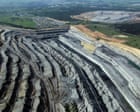
The full article is on the original publisher site.
AI insight
AI-generated
Climate campaigners are pressuring the Albanese government to reject the expansion of the Hunter Valley Operations coalmine in New South Wales, citing a global shift away from fossil fuels highlighted at the Cop31 climate summit. The federal environment minister, Murray Watt, is responsible for the final approval decision, following a local planning commission's earlier approval.
The political and regulatory uncertainty surrounding the proposed coalmine expansion introduces significant risk to long-term supply forecasts for Australian coal. The channel is regulatory, driven by international climate pressure, which could halt or delay major capital expenditure projects in the energy sector.
Key Insights
- The proposed coalmine expansion would permit the extraction and burning of an additional 430 million tonnes of coal over 19 years.
- The failure of a key agreement at Cop31, driven by nations demanding a fossil fuel transition statement, is cited by activists.
- The Australian Conservation Foundation deems the approval of the project as 'reckless,' linking fossil fuel exports to climate disasters.
- The New South Wales planning commission previously approved the expansion, stating its local benefits outweighed climate damage.
- The final decision on the mine expansion now rests with Federal Environment Minister Murray Watt.
Industrial Coal input costs remain volatile within 48h, leading industrial consumers to adopt cautious inventory management. The key risk is that the uncertainty itself drives temporary inventory risk.
Sign in to see all sector verdicts, full thesis and counter-argument debate.
Sector impact at a glance
- Emerging MarketsMid term (1–4 weeks)
Accelerated global transition risk dampens long-term coal demand in emerging economies over 2-4 weeks. The key risk is that structural demand shifts take longer than the predicted short window.
Thesis
International climate pressure accelerates global transition risk, pressuring long-term consumer demand for coal in emerging economies. Affected: Coal. Global transition risk accelerates, pressuring long-term consumer demand. Window: 2-4 weeks cumulative. Scarcity: no — demand substitution risk.
Antithesis
Structural shifts in emerging market coal demand are driven by long-term economic development cycles, making the 2-4 week window for significant dampening unrealistic.
- Global EnergyMid term (1–4 weeks)
Regulatory hurdles threaten long-term supply stability for Australian Coal, leading to constrained volume risk over 2-4 weeks. The key risk is that global supply alternatives mitigate the severity of the contraction.
Thesis
Regulatory uncertainty regarding the 2045 expansion introduces long-term supply risk for Australian coal. Affected: Australian Coal. Project financing risk increases, leading to sustained margin erosion for developers. Window: 2-4 weeks cumulative. Scarcity: yes — long-term supply contraction risk.
Antithesis
The claim of significant long-term volume risk is likely exaggerated, as existing global coal supply (e.g., Indonesia, South Africa, US) provides substantial alternative capacity.
- Global EnergyShort term (1–2 days)
Regulatory uncertainty causes increased volatility in Australian Coal futures within 48h, rather than a clear directional price movement. The key risk is that uncertainty drives wider spreads instead of directional contraction.
Thesis
International climate pressure on COP31 introduces regulatory risk, causing short-term volatility in Australian thermal/metallurgical coal futures. Affected: Australian Coal. Immediate market uncertainty causes short-term risk premium expansion. Window: 48h reflex. Scarcity: no — immediate market uncertainty.
Antithesis
The immediate directional price contraction is likely overstated; regulatory uncertainty typically increases volatility and wider spreads rather than causing a narrow, directional price drop.
- Global IndustrialsMid term (1–4 weeks)
Constrained supply from Australian sources drives up Industrial Coal input costs by 5-10% over 2-4 weeks. The key risk is that industrial buyers absorb the cost increase due to long-term contracts.
Thesis
Climate-driven regulatory delays on coal expansion create supply constraints, putting upward pressure on industrial input costs. Affected: Industrial Coal inputs. Suppliers gain pricing power due to constrained supply. Window: 2-4 weeks cumulative. Scarcity: yes — constrained supply from key Australian source.
Antithesis
The full 5-10% cost increase may not be realized by suppliers, as industrial buyers often operate under long-term procurement contracts or are highly price-sensitive.
- Global IndustrialsShort term (1–2 days)
Industrial Coal input costs remain volatile within 48h, leading industrial consumers to adopt cautious inventory management. The key risk is that the uncertainty itself drives temporary inventory risk.
Thesis
Regulatory uncertainty surrounding Australian coal supply causes industrial input costs to face a 1-3% volatility band. Affected: Industrial Coal inputs. Customers delay long-term procurement decisions, causing temporary inventory risk. Window: 48h reflex. Scarcity: no — immediate market buffer.
Affected products & commodities
- Coal
Supply-chain signals
- Australian government regulatory approval
- International climate policy demands
Claims Assessed
- VerifiableThe Hunter Valley Operations expansion would allow for the extraction and burning of 430 million tonnes of coal.
- VerifiableThe companies involved estimate the development could result in 800 million tonnes of greenhouse gas emissions when the coal is burned abroad.
- VerifiableThe Cop31 negotiations failed because several nations insisted on an explicit statement about transitioning away from fossil fuels.
- VerifiableThe NSW planning commission ruled that the local benefits of the expansion outweighed the climate damage.
Missing Context
The article does not provide the specific recommendation from the national environmental protection agency, nor does it detail the political ramifications or the specific arguments the government might use to defend the project against the climate warnings.
This analysis would be wrong if
If the Australian government provides definitive regulatory approval or rejection of the coalmine expansion, or if global coal inventories prove sufficient to absorb the projected supply reduction.
Historical parallels
- Government policy shifts regarding fossil fuel extraction often lead to long-term supply volatility and increased project financing risk.