www.sozcu.com.tr · · TR
Cok Az Maliyetle Kendi Evini Yapti Gorenler Gozlerine Inanamadi P
News Analysis — AI Analysis
Original analysis generated by News Analysis. This is our own commentary on the story, not the publisher's article text.
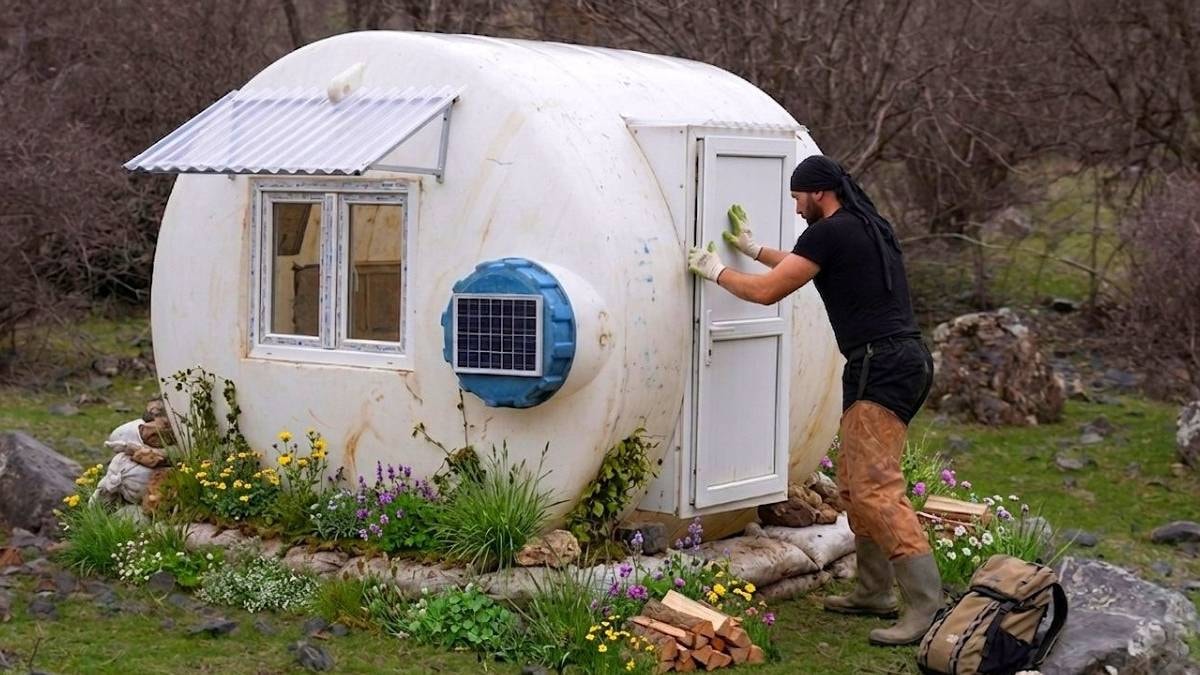
A low-cost home was constructed by transforming a large, used plastic water tank using recycled wooden pallets and underground insulation techniques. The builder utilized the existing tank structure for its waterproof durability while integrating it into the landscape to provide natural thermal stability. This approach successfully transformed an industrial object into a functional, Hobbit-style residence.
Key points
- The core of the project was a large, used plastic water tank, which provided the main structural element due to its inherent waterproof nature.
- Underground insulation and partial burial were employed to enhance structural stability and ensure passive temperature regulation against extreme weather.
- Recycled wooden pallets were creatively used to build an arched facade, completely concealing the industrial appearance of the original tank.
- The design incorporated architectural elements like a dark circular door and segmented round windows to achieve a fantasy underground dwelling aesthetic.
Claims assessed
- VerifiableUsing recycled materials and underground insulation allowed for the construction of a low-cost home, bypassing expensive traditional building stages.
- VerifiableThe partial burial method provides structural stability and allows the house to benefit from stable temperatures beneath the surface, protecting it from extreme heat or cold.
Missing context
The article does not mention the specific costs incurred or the total size/square footage of the completed dwelling, which would provide a clearer picture of its feasibility for average readers.
Topic context
The full article is on the original publisher site.
AI insight
AI-generatedInnovative use of recycled materials signals structural cost advantages in construction (EM_CONSTRUCTION), but immediate market impact is muted. The key risk across both sectors is the high initial capital expenditure and regulatory hurdles required to scale up recycling infrastructure, which currently offsets projected material savings.
The article describes a low-cost, innovative residential building technique using industrial waste (water tanks) and recycled materials (wooden pallets). This signals a potential reduction in input costs for basic structural components (foundations/walls), benefiting the general housing construction sector by lowering material expenditure.
Signals our AI researcher identified
Extracted by our AI model from this article and related public sources — not direct quotes from the publisher.
- Cylindrical water tank repurposed for housing structure.
- Low-cost construction method utilizing semi-buried design.
- Façade made from recycled wooden pallets.
Affected products & commodities
- Low-cost housing units
- Structural foundations
- Building façade materials
Supply-chain signals
- Recycled industrial waste utilization (water tanks)
- Pallet supply chain management
This analysis would be wrong if
If a major government mandate or subsidized funding mechanism for specialized waste processing (CapEx) is announced, validating the scalability of recycled materials beyond local pilot projects.
Mid-term profitability improvements are tempered by high initial capital expenditure requirements. The structural cost reduction is possible but faces significant infrastructure hurdles.
Sign in to see all sector verdicts, full thesis and counter-argument debate.
Sector impact at a glance
- EM_CONSTRUCTIONmid
- GLOBAL_INDUSTRIALSmid
Related stories

theglobeandmail.com
Article Premarket Stocks Rise as Spacex Fever Lifts Tech Yen Flat After Boj
winnipegfreepress.com
Carney Announces New Sanctions Against Russia Following G7 Meeting With Zelenskyy

marinelink.com
UK Expands Russia Sanctions Focus Shadow

themoscowtimes.com
UK Sanctions Russias New Arctic Lng Fleet in War Economy Crackdown a

economictimes.indiatimes.com