asianews.network ·
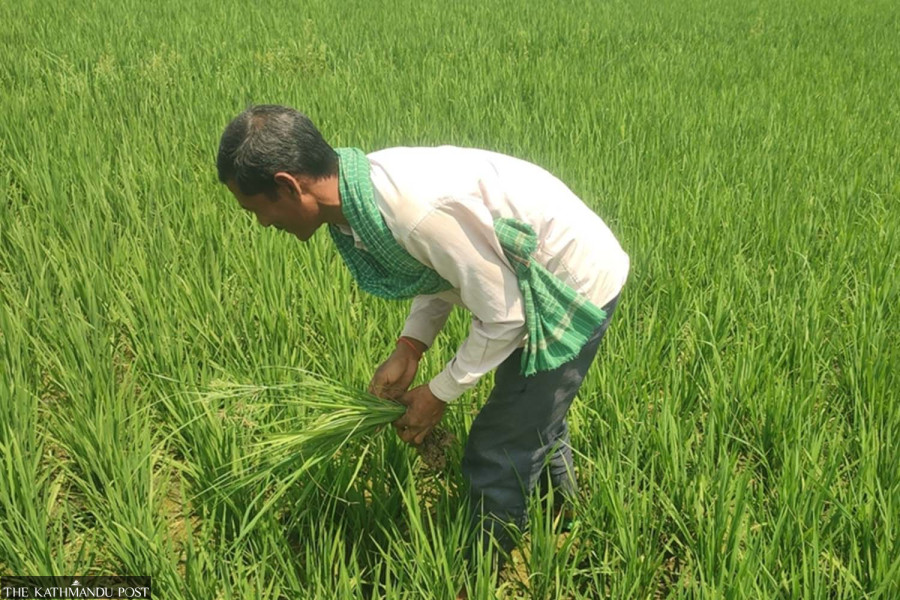
flood prone farmers in nepal turn to spring paddy to secure livelihoods
The full article is on the original publisher site. This page only shows the headline and a very short excerpt.
AI insight
AI-generatedThe article describes an agricultural adaptation in Nepal (a specific country/region) to flooding, with government budget allocation. The commercial mechanism is weak: no direct commodity price impact, no scarcity creation, no margin squeeze. The primary sector is agriculture (rice/paddy) in an emerging market context. The government allocation is a concrete investment (category a), so at least one sector is emitted.
Signals our AI researcher identified
Extracted by our AI model from this article and related public sources — not direct quotes from the publisher.
- Farmers in Kailali, Nepal, shift to spring paddy to avoid monsoon floods.
- Spring paddy transplanted in March, harvested before peak floods.
- Provincial government allocated Rs704 million for spring paddy under 'One local unit, two products' campaign for 2025-26.
- Farmers face inconsistent irrigation, rising costs, and low market prices.
- Some farmers report increased yields and income from spring paddy.
Government budget allocation may lead to a flat to slightly down price impact for local paddy within 1-4 weeks.
Sign in to see all sector verdicts, full thesis and counter-argument debate.