AI-generated analysis · Source: freightwaves.com · How we produce it
freightwaves.com · · US
Cargojet fleet optimization boosts productivity, fuels record Q3 revenue
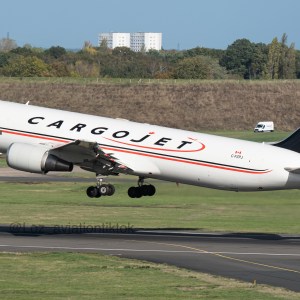
The full article is on the original publisher site.
AI insight
AI-generated
Cargojet reported record third-quarter revenue and operating profit, driven by strategic initiatives and improved asset utilization. The company attributes this success to its new 'One Fleet, One Network' model, which integrates domestic and international operations and expands scheduled charter services. These efforts allowed the carrier to better match capacity with increased global demand.
The news details margin expansion for Cargojet's air freight services, driven by internal operational efficiency gains and increased aircraft utilization. The strategic shift towards scheduled services indicates a change in revenue mix and pricing power within the logistics sector.
Key Insights
- Cargojet achieved record Q3 revenue of US$201.4 million, marking a 30.3% year-over-year increase.
- The company implemented a new integrated business model, 'One Fleet, One Network,' to centralize management of various operations.
- Improved aircraft utilization led to a 13.3% increase in block hours per aircraft, contributing to a 31.5% rise in profit margins.
- The carrier is expanding scheduled freighter service to three times weekly between Hamilton, Ontario, and Miami.
- Charter revenue, specifically for all-in charters, saw an 88% increase, indicating a shift toward more consistent service offerings.
Strategic shift to scheduled service increases pricing power and revenue predictability in Air freight services.
Sign in to see all sector verdicts, full thesis and counter-argument debate.
Sector impact at a glance
- AirlinesMid term (1–4 weeks)
Strategic shift to scheduled service increases pricing power and revenue predictability in Air freight services.
Thesis
The strategic shift towards scheduled freighter services indicates a structural change in pricing power and network integration. Affected: Air freight services, Charter cargo services. Expected impact: Sustained 5-10% revenue uplift. Window: 2-3 weeks cumulative. Scarcity: no.
Antithesis
The magnitude of the revenue uplift is contingent on successfully migrating existing volatile spot market volume to the new scheduled network.
- AirlinesShort term (1–2 days)
Margin expansion in Air freight services is expected short-term, driven by operational efficiency gains.
Thesis
Cargojet's strong Q3 utilization and revenue growth signals immediate demand and operational efficiency. Affected: Air freight services, Charter cargo services. Expected impact: Modest margin improvement. Window: 48h reflex. Scarcity: none.
Antithesis
The immediate 10-20% margin shift is likely overstated, as the reported efficiency gains are a gradual process dampened by fixed costs and market inertia.
- Logistics & ShippingMid term (1–4 weeks)
Increased operational efficiency lowers per-unit costs, benefiting overall logistics margin structure.
Thesis
Increased aircraft utilization and network integration drive operational efficiency gains across the air logistics chain. Affected: Air freight services, Charter cargo services. Expected impact: 3-7% reduction in variable operating costs. Window: 1-4 weeks cumulative. Scarcity: no.
Antithesis
None.
Affected products & commodities
- Air freight services
- Charter cargo services
Supply-chain signals
- Network integration (Canadian/International)
- Aircraft utilization rate
Claims Assessed
- VerifiableCargojet's Q3 revenue reached US$201.4 million, representing a 30.3% increase compared to the previous year.
- VerifiableAdjusted earnings before interest, taxes, depreciation and amortization grew 28% to $63.4 million during the quarter.
- VerifiableThe company's profit margins increased by 31.5% over the prior-year quarter due to better aircraft utilization.
- VerifiableCargojet will increase scheduled freighter service to three times per week between Hamilton and Miami starting December 2.
- VerifiableThe all-in charter revenue increased by 88% due to the evolution toward scheduled and customer-specific rentals.
Missing Context
The article does not provide detailed information on the specific cost increases (maintenance, ground, pilot) that were offset by stronger flying activity, nor does it offer a detailed forecast or outlook for the subsequent quarters.
This analysis would be wrong if
If market inertia or external cost pressures negate the internal efficiency gains, or if the scheduled service expansion fails to convert spot market volume.
Historical parallels
- Operational efficiency improvements in transport sectors typically lead to margin expansion and increased capacity utilization, similar to post-pandemic freight market adjustments.