www.fool.com ·
Fed Kevin Warsh Fomc Drop Hammer on Trumpflation
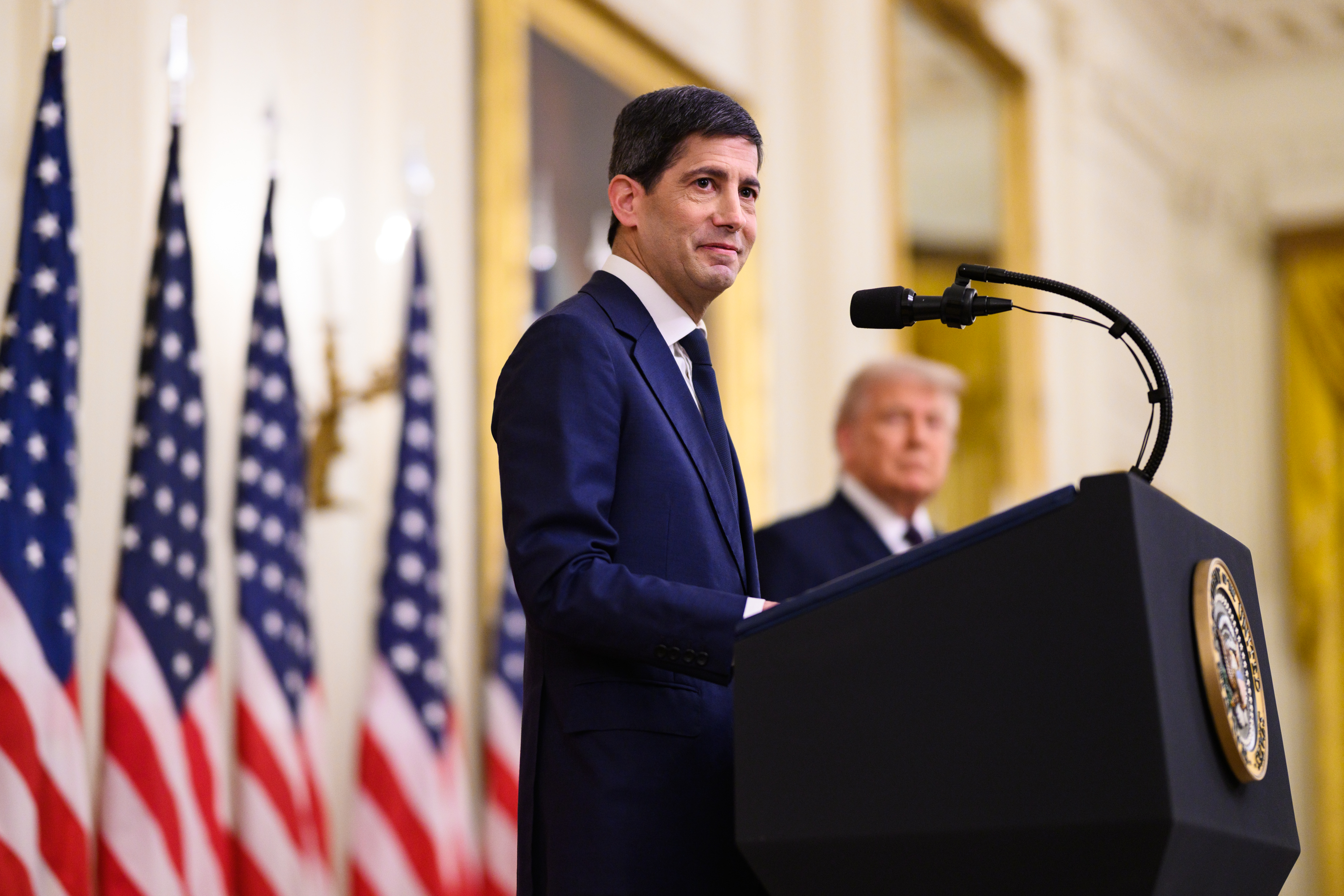
News Analysis — AI Analysis
Original analysis generated by News Analysis. This is our own commentary on the story, not the publisher's article text.
The article suggests that Fed Chair Kevin Warsh and the FOMC are likely to signal a shift away from an easing bias toward a more neutral stance during their upcoming meeting on June 17th. This change, coupled with high inflation figures, could represent the Federal Reserve's first move to combat what the author terms "Trumpflation." However, such a policy shift is predicted to be viewed negatively by Wall Street and investors.
Key points
- The Fed recently saw a leadership transition, with Kevin Warsh taking over from Jerome Powell as Chair.
- Inflation reached a three-year high of 4.2% in May, according to the Bureau of Labor Statistics.
- Warsh's shift toward a neutral bias is expected to give the FOMC greater flexibility in monetary policy decisions.
- The author notes that Warsh has historically favored higher interest rates and cautioned against rate cuts during economic downturns.
- Any move by the Fed to tighten policy could be perceived negatively, potentially destabilizing the stock market.
Claims assessed
- VerifiableFed Chair Kevin Warsh and the FOMC are likely to take steps toward combating inflation this week.
- VerifiableThe Fed's shift from an easing bias to a neutral one would provide more room for policy maneuvering.
- VerifiableWarsh has historically favored higher interest rates, even during periods of high unemployment.
- VerifiableA shift to a neutral bias would signal that rate hikes are becoming more likely, which could be bad for the stock market.
Missing context
The article does not provide specific details on what constitutes a 'neutral bias' in practice or how much of an actual change from the easing bias is expected. It also fails to address potential mitigating factors for the negative market reaction, such as targeted sector support or government fiscal policy.
Topic context
The full article is on the original publisher site.
AI insight
AI-generatedThe Fed's pivot toward neutrality signals higher cost of capital, pressuring global banking and emerging markets in the short term. Global BANKING and EM_MARKETS face immediate downward pressure on margins/currencies (Magnitude 2). Key risk: if commodity inflows or strong fee-based revenues prove sufficient to buffer rate increases, the predicted decline magnitude will be significantly reduced.
The news describes a potential policy pivot by the Federal Reserve (Fed) signaled by Kevin Warsh, moving away from an easy monetary policy ('easing bias') toward a 'neutral stance' to combat high inflation (4.2%). This shift signals tighter financial conditions and increased cost of capital, directly impacting equity valuations and potentially slowing growth in sectors sensitive to interest rates.
Signals our AI researcher identified
Extracted by our AI model from this article and related public sources — not direct quotes from the publisher.
- Inflation hit 4.2% in May (highest in three years)
- Kevin Warsh taking over as Fed Chair on May 22
- Warsh's first FOMC meeting scheduled for June 17
- Anticipated shift from easing bias to neutral stance on interest rates
Affected products & commodities
- Interest Rates
- Equity Valuations
- Credit Availability
Supply-chain signals
- Monetary Policy Cycle (Fed)
- Cost of Capital
Historical parallels
- Historically, shifts from easing to neutral/tightening monetary policy have typically led to increased volatility and downward pressure on speculative asset valuations (e.g., tech stocks), although the magnitude depends on inflation persistence.
This analysis would be wrong if
If a concrete policy statement confirms that the Fed's pivot is gradual and highly targeted, focusing on specific inflation metrics rather than general monetary tightening.
Sustained global tightening will increase debt servicing costs and pressure EM sovereign bonds. The impact is expected to be selective, favoring high-quality commodity exporters.
Sign in to see all sector verdicts, full thesis and counter-argument debate.
Sector impact at a glance
- EM_MARKETSmid
- EM_MARKETSshort
- GLOBAL_BANKINGmid
- GLOBAL_BANKINGshort
- SP500_FINANCIALSmid
- SP500_FINANCIALSshort
Related stories
finanznachrichten.de
68766899 gilat satellite networks ltd gilat to acquire comtech s satellite space communications segment creating a leading provider of advanced defense and 399
nakedcapitalism.com
The US May Not Have Troops on the Ground but Venezuelas Government Is Occupied

theglobeandmail.com
Article Mondays Analyst Upgrades and Downgrades 275
themarketsdaily.com
Landscape Capital Management L L C Sells 5127 Shares of Meta Platforms Inc Meta

juniorminingnetwork.com