scroll.in · · IN
Jaishankar Protests Deaths of 3 Indian Seafarers in US Strikes in Call With American Official
News Analysis — AI Analysis
Original analysis generated by News Analysis. This is our own commentary on the story, not the publisher's article text.
India's External Affairs Minister, S. Jaishankar, publicly protested US Navy strikes in the Gulf that resulted in the deaths of three Indian seafarers near Oman. This protest followed India summoning the US Chargé d’Affaires to register strong concerns regarding continued US attacks on commercial vessels carrying Indian crew members in West Asia. The US military claimed these actions were necessary because the targeted ships allegedly violated an American blockade restricting Iranian oil transport.
Key points
- India registered a formal protest against US Navy strikes in the Gulf, citing the deaths of three Indian mariners near Oman.
- The Ministry of External Affairs summoned the US Chargé d’Affaires multiple times to convey India's deep concerns about ongoing attacks.
- The US Central Command stated that the targeted vessels were struck because they allegedly violated an American blockade restricting maritime traffic linked to Iran.
- India noted that all three ships struck between Monday and Thursday were foreign-flagged, with two being sanctioned by the US OFAC.
- Multiple incidents occurred, including the rescue of 21 crew members from a Palau-flagged tanker and 24 seafarers from another vessel.
Claims assessed
- VerifiableThe US Navy struck commercial vessels in the Gulf that resulted in the deaths of three Indian seafarers off the coast of Oman.
- VerifiableIndia's External Affairs Minister reiterated a strong protest against these lethal actions by the US Navy.
- VerifiableThe US Central Command claimed that the targeted vessels violated an American blockade restricting maritime traffic linked to Iran.
- VerifiableIndia stated that all three ships struck by the US military between Monday and Thursday were foreign-flagged.
Missing context
The article does not provide details regarding the specific nature of the US blockade or the full scope of the geopolitical tensions in West Asia that led to these strikes. It also lacks independent confirmation or counter-arguments from the US government beyond their stated justifications for the attacks.
Topic context
The full article is on the original publisher site.
AI insight
AI-generatedGeopolitical tensions will increase war-risk premiums and operational costs for maritime cargo transport services in the short term (10-20% premium spike; 3-6% freight hike). The key risk is that initial cost pass-through into rates may be delayed or mitigated by global reinsurance capacity, preventing immediate full rate spikes.
This news primarily involves geopolitical tension affecting maritime safety, rather than direct commercial mechanisms. However, the reported strikes increase operational risk (security/warfare) for shipping routes in the Gulf region. This raises insurance premiums and increases perceived input costs for global logistics operations passing through West Asia.
Signals our AI researcher identified
Extracted by our AI model from this article and related public sources — not direct quotes from the publisher.
- India protested US strikes on commercial vessels in the Gulf.
- Three Indian seafarers were killed by US Navy actions off Oman coast.
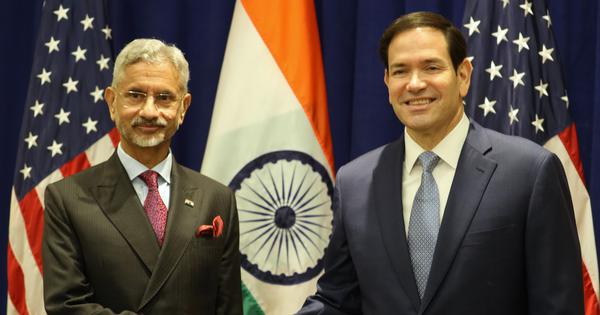
- The protest was registered during a call between S Jaishankar and Marco Rubio.
Affected products & commodities
- Maritime cargo transport services
- Shipping insurance policies
Supply-chain signals
- Gulf of Oman shipping routes security risk
- Indian seafarer deployment/labor cost stability
Historical parallels
- Increased piracy or conflict zones (e.g., Red Sea crisis) typically lead to immediate spikes in war-risk insurance premiums and rerouting costs, impacting global shipping schedules and rates.
This analysis would be wrong if
If major diplomatic de-escalation occurs quickly, leading to a rapid normalization of war-risk insurance premiums and an immediate reduction in perceived operational risk.
Sustained regional instability will lead to higher long-term premiums for Gulf routes. However, the magnitude is moderated by potential reinsurance actions.
Sign in to see all sector verdicts, full thesis and counter-argument debate.
Sector impact at a glance
- GLOBAL_INSURANCEmid
- GLOBAL_INSURANCEshort
- LOGISTICS_SHIPPINGmid
- LOGISTICS_SHIPPINGshort