AI-generated analysis · Source: enerjigunlugu.net · How we produce it
enerjigunlugu.net · · TR
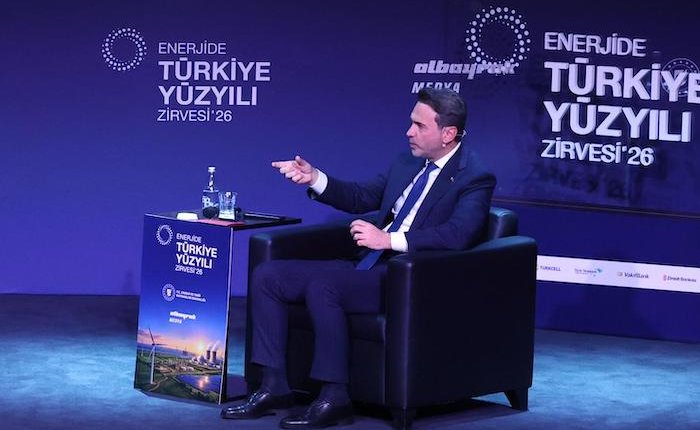
Bayraktar: Chevron ile Gine-Bissau'da iki sahada ortaklığımız oldu
The full article is on the original publisher site.
AI insight
AI-generated
The Minister of Energy and Natural Resources, Alparslan Bayraktar, announced that Turkey has entered into partnerships with Chevron in two offshore areas in Guinea-Bissau. He also stated that Turkey plans to meet the natural gas needs of 16-17 million households using its own production by 2028.
The news signals a significant capex cycle expansion for Turkey Petroleum, driven by international acquisitions (Chevron partnership) and domestic capacity enhancement (Osman Gazi gas production). This shifts the supply curve for both crude oil and natural gas.
Key Insights
- A partnership was signed with Chevron for two offshore areas in Guinea-Bissau.
- Turkey aims to produce approximately 16-17 billion cubic meters of gas annually from its own fields.
- The current production from the Osman Gazi Floating Production Platform will be quadrupled after completing the third phase in 2028.
- Exploration drilling is ongoing in the West Black Sea at the Akçabeyli well, which is suspected to hold oil indications.
- Plans are ready for drilling in the Central and East Black Sea regions.
Natural Gas and Crude Oil are expected to see a modest domestic equity positive sentiment within 48 hours. This reflects strong domestic capital commitment to the local energy sector.
Sign in to see all sector verdicts, full thesis and counter-argument debate.
Sector impact at a glance
- EM EnergyMid term (1–4 weeks)
Natural Gas is expected to see a modest stabilization of local input costs over the next 12-24 months. This is due to the long-term bolstering of domestic supply resilience.
Thesis
The planned quadrupling of production capacity will significantly bolster domestic supply resilience. Affected: Natural Gas. Expected impact: Reduced input cost volatility and 100-200bps margin expansion for domestic consumers. Window: 12-24 months. Scarcity: none.
Antithesis
The benefits of reduced import reliance are structurally long-term, and immediate project mobilization and completion within 1-4 weeks is highly unlikely for a project of this scale.
- EM EnergyShort term (1–2 days)
Natural Gas and Crude Oil are expected to see a modest domestic equity positive sentiment within 48 hours. This reflects strong domestic capital commitment to the local energy sector.
Thesis
Major international partnerships and domestic investment signals validate the long-term viability of the local energy sector. Affected: Natural Gas, Crude Oil. Expected impact: Increased local revenue visibility, leading to 1-3% domestic equity positive sentiment. Window: 48h reflex. Scarcity: none.
- Global EnergyMid term (1–4 weeks)
Crude Oil and Natural Gas are projected to face gradual downward pressure on benchmark pricing over the next 6-12 months. This is driven by the cumulative increase in global supply availability.
Thesis
The combination of new field development and flaring reduction will incrementally increase global supply availability. Affected: Crude Oil, Natural Gas. Expected impact: 2-4% downward pressure on benchmark pricing. Window: 6-12 months. Scarcity: none.
Antithesis
The time window for a measurable global supply buffer shift from a single regional project is significantly longer than 2-3 weeks, requiring substantial operational time.
- Global EnergyShort term (1–2 days)
Crude Oil and Natural Gas are expected to see a marginal margin expansion risk reduction within 48 hours. This reflects positive sentiment regarding regional supply stability.
Thesis
The strategic expansion of production capacity and international partnerships enhances regional supply confidence. Affected: Crude Oil, Natural Gas. Expected impact: 50-100bps margin expansion risk reduction. Window: 48h reflex. Scarcity: none.
- Oil & Gas UpstreamMid term (1–4 weeks)
Crude Oil and Natural Gas are projected to face gradual downward pressure on forward contract margins over the next 12-24 months. This pressure stems from the long-term increase in production capacity.
Thesis
Operational efficiency gains and planned capacity increases are set to shift the supply curve over time. Affected: Natural Gas, Crude Oil. Expected impact: 2-4% downward pressure on forward contract margins. Window: 12-24 months. Scarcity: none.
Antithesis
The planned quadrupling of production is a long-term CAPEX goal (by 2028); the mechanism assumes immediate operational efficiency gains, ignoring the necessary construction and mobilization lags.
- Oil & Gas UpstreamShort term (1–2 days)
Crude Oil and Natural Gas are expected to see minimal immediate margin impact within 48 hours. The market reaction is muted as the news reflects long-term capital planning rather than an immediate supply shock.
Thesis
The establishment of international partnerships and domestic capacity expansion signals a major capex cycle acceleration. Affected: Crude Oil, Natural Gas. Expected impact: 1-3% price stability range (flat). Window: 48h reflex. Scarcity: none.
Affected products & commodities
- Crude Oil
- Natural Gas
Supply-chain signals
- International upstream energy partnerships
- Domestic production capacity expansion
Claims Assessed
- VerifiableTurkey has established partnerships with Chevron in two maritime zones in Guinea-Bissau.
- VerifiableTurkey intends to cover the natural gas requirements for 16 to 17 million households using its domestic gas.
- VerifiableThe Osman Gazi Floating Production Platform will increase its current output fourfold after the completion of the third phase in 2028.
- VerifiableDrilling operations are currently underway in the West Black Sea at the Akçabeyli well, which is believed to have oil signs.
Missing Context
The article does not provide details on the specific terms of the partnership with Chevron, nor does it elaborate on the current status or timeline of the planned drilling in the Central and East Black Sea.
This analysis would be wrong if
If regulatory approvals or project timelines prove insufficient to support the long-term capacity expansion, or if global demand forecasts unexpectedly surge, negating the supply increase.
Historical parallels
- Major international energy partnerships typically lead to long-term supply volume increases and improved operational efficiency.