gcaptain.com ·
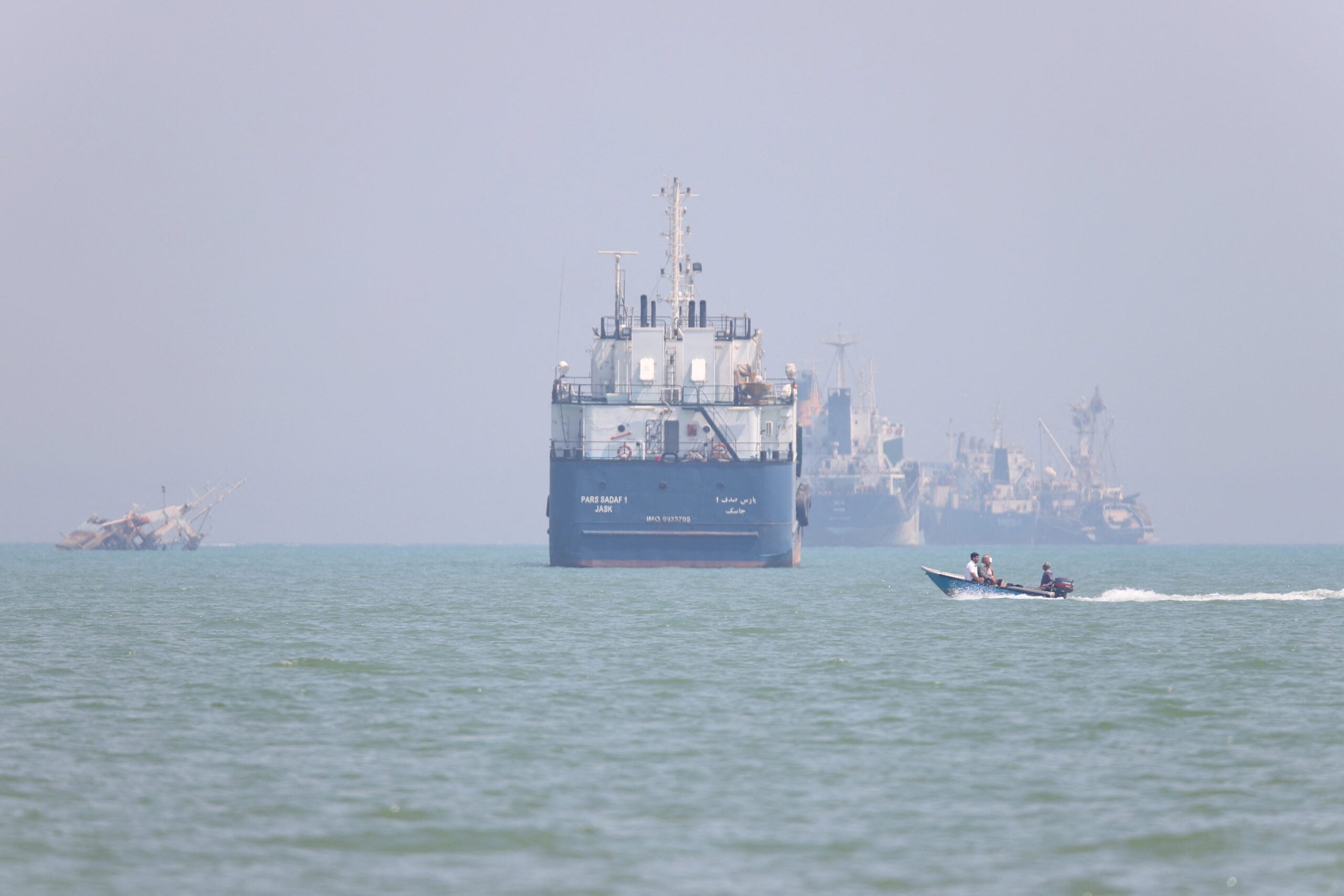
Trump Says Hell Sign Deal With Iran to Reopen Hormuz Sunday
News Analysis — AI Analysis
Original analysis generated by News Analysis. This is our own commentary on the story, not the publisher's article text.
Former President Donald Trump claimed he would sign an interim deal with Iran on Sunday, aimed at reopening the Strait of Hormuz and ending conflict. However, this claim is contradicted by Iran, which maintains that key disagreements remain regarding the management of the waterway and payments to the Islamic Republic. The US aims to reopen the strait and curb Iran's nuclear program, while Iran insists on retaining control over the passage and accessing its frozen assets.
Key points
- Trump announced a deal signing for Sunday that would supposedly reopen the Strait of Hormuz and end conflict with Iran.
- Iran has contradicted Trump’s timeline, citing ongoing disagreements over waterway management and financial payments.
- The US objectives include reopening the strait to traffic and restricting Iran's nuclear capabilities.
- Key sticking points involve Iran demanding payment for war damage and access to frozen assets, while the US expects no monetary payout in the deal.
- Pakistan is reportedly preparing for an electronic signing of a peace agreement, followed by technical talks on Iran’s nuclear program.
Claims assessed
- VerifiableDonald Trump stated that an interim deal to reopen the Strait of Hormuz and end conflict with Iran would be signed on Sunday.
- VerifiableIran's Foreign Minister echoed Trump’s expectations for a signing, but a state spokesman ruled out a signing on Sunday.
- VerifiableThe US intends to remove enriched nuclear material from Iran and destroy it either in the US or within Iran.
- VerifiableIran insists that any deal must allow it to retain a degree of control over the Strait of Hormuz waterway.
Missing context
The article does not specify the current geopolitical status of Iran's Supreme Leader Mojtaba Khamenei regarding his approval of any potential accord, nor does it provide details on the specific nature of the 'war that began in February.'
Topic context
The full article is on the original publisher site.
AI insight
AI-generatedDe-escalation news provides a moderate upward price reflex for Crude Oil and related energy inputs (1-3% spike) within 48 hours. However, the magnitude of this rally is constrained by unresolved core sanctions issues in the region. Main risk: If the initial positive sentiment fails to translate into concrete, sustained policy or financial resolutions, the market will quickly discount the premium.
The potential reopening of the Strait of Hormuz, a critical global oil chokepoint, directly impacts crude oil supply and shipping logistics. The mechanism involves de-escalation reducing geopolitical risk premiums on energy commodities. The primary affected commodity is crude oil (Brent/WTI), while the financial channel relates to sanctions relief and investment certainty in the MENA region.
Signals our AI researcher identified
Extracted by our AI model from this article and related public sources — not direct quotes from the publisher.
- Interim deal to reopen Strait of Hormuz announced for Sunday.
- Deal aims to resolve conflict with Iran and prevent nuclear weapons development.
- Iran requires access to frozen assets; US/Trump claims no money transfer.
- Pakistan is facilitating negotiations.
- Conflict ongoing since February.
Affected products & commodities
- Crude Oil (Oil)
- Shipping Insurance Premiums
- Natural Gas (via maritime routes)
Supply-chain signals
- Strait of Hormuz transit flow
- Global oil price volatility due to geopolitical risk
Historical parallels
- Previous de-escalation agreements in the Persian Gulf region typically lead to a sharp reduction in 'geopolitical risk' premiums on crude oil, causing temporary upward price movement (magnitude: 5-10%) followed by stabilization.
This analysis would be wrong if
If a definitive agreement resolving Iran's frozen assets and US/Western sanctions compliance is published, leading to verifiable capital flow mechanisms.
The de-escalation news will drive a moderate upward price reflex for crude oil benchmarks within 48 hours. Key risk: The initial rally is constrained by the fact that core sanctions issues remain unresolved.
Sign in to see all sector verdicts, full thesis and counter-argument debate.
Sector impact at a glance
- COMMODITY_OILmid
- COMMODITY_OILshort
- EM_MARKETSshort
- GLOBAL_ENERGYmid
- GLOBAL_ENERGYshort
- LOGISTICS_SHIPPINGmid
- LOGISTICS_SHIPPINGshort
Related stories
elpais.com
El Caso Zapatero Pone Al Gobierno Al Limite De La Resistencia
localnews8.com
Russias Overwhelming Manpower Advantage Against Ukraine Is Starting to Wane

news24.com
Amabhungane Analysis Tongaat Hulett Business Rescue Brinkmanship on Steroids in the Service of a Dubious Zim Elite 20260612 0946
economictimes.indiatimes.com
Vedanta Listing Why Its Aluminium Business Is the Undisputed Crown Jewel of the Mega 4 Way Demerger

thisdaylive.com