www.spokesman.com ·
Trump Says Deal to End War Will Be Signed on Sunda
News Analysis — AI Analysis
Original analysis generated by News Analysis. This is our own commentary on the story, not the publisher's article text.
U.S. President Donald Trump and Pakistan announced that an initial peace deal to end the Middle East conflict would be signed on Sunday, according to Pakistani Prime Minister Shehbaz Sharif. The proposed memorandum of understanding involves Iran reopening the vital Strait of Hormuz and lifting U.S. naval blockades in exchange for the release of billions in frozen Iranian assets and sanctions waivers. However, Iran questioned the immediate timing of the signing.
Key points
- Pakistan's PM Shehbaz Sharif announced an agreement framework with the U.S. for a peace deal to be electronically signed on Sunday.
- The proposed deal requires Iran to reopen the Strait of Hormuz and lift its effective blockade, while the U.S. would release frozen assets and waive sanctions.
- Iran's Foreign Ministry spokesperson cautioned against commenting on the specific timing of the signing, stating it would not be immediately.
- Negotiations regarding Iran’s nuclear program are slated to take place in a subsequent phase after the initial agreement is signed.
- The conflict, which began with U.S.-Israeli strikes on Iran, has significantly impacted global energy prices and regional stability.
Claims assessed
- VerifiableAn initial peace deal between the U.S. and Iran would be signed on Sunday, following an agreement framework reached by Pakistan.
- VerifiableThe core requirements of the deal include Iran reopening the Strait of Hormuz and lifting its blockade in exchange for the release of frozen Iranian assets and sanctions waivers from the U.S.
- VerifiableIran's Foreign Ministry has publicly questioned the immediate timing of the peace agreement signing, stating it will not happen tomorrow.
- VerifiableThe U.S. would lift its naval blockade on Iranian ports and release billions in frozen assets only after Iran fully opens the Strait of Hormuz.
Missing context
The article does not specify the full scope or detailed terms of the 'technical-level talks' planned for the following week, nor does it provide independent verification of the feasibility or commitment level of any party to the proposed agreement.
Topic context
Related topics
The full article is on the original publisher site.
AI insight
AI-generatedGeopolitical de-escalation in the Persian Gulf is expected to moderately reduce risk premiums on global energy assets (Crude Oil, Natural Gas) over the next week. The key risk across all sectors is that initial price drops will be dampened by existing inventory buffers and slow contractual adjustments.
The proposed deal directly targets geopolitical instability affecting global energy supply routes (Strait of Hormuz) and sanctions relief for Iran. A successful deal could reduce risk premiums on oil/gas prices, easing input costs for global energy consumers. The mechanism is primarily regulatory/geopolitical de-escalation.
Signals our AI researcher identified
Extracted by our AI model from this article and related public sources — not direct quotes from the publisher.
- Proposed deal involves reopening the Strait of Hormuz.
- Deal aims to lift U.S. naval blockade on Iran.
- Exchange for releasing billions in frozen Iranian assets.
- Agreement addresses Iran's nuclear program and war reparations.
- Israeli Prime Minister Netanyahu stated Israel would not be part of the agreement.
Affected products & commodities
- Crude Oil
- Natural Gas
- Shipping Insurance Premiums
Supply-chain signals
- Strait of Hormuz transit stability
- U.S. sanctions enforcement on Iran's energy sector
Historical parallels
- De-escalation in the Persian Gulf region typically leads to a sharp drop in oil/gas price volatility and associated insurance premiums.
This analysis would be wrong if
If shipment disruption or geopolitical tensions are not verified, or if insurance premiums fail to normalize quickly due to complex charter contract lags.
Natural gas prices should see a moderate drop due to reduced transit risk through the Persian Gulf region over the next week. The key risk is that seasonal demand cycles will counteract the geopolitical price relief.
Sign in to see all sector verdicts, full thesis and counter-argument debate.
Sector impact at a glance
- COMMODITY_GASshort
- COMMODITY_OILshort
- EM_MARKETSshort
- GLOBAL_ENERGYmid
- GLOBAL_ENERGYshort
Related stories

us.cnn.com
Russia Manpower Problem Ukraine War Intl
yahoo.com
Russia Overwhelming Manpower Advantage Against
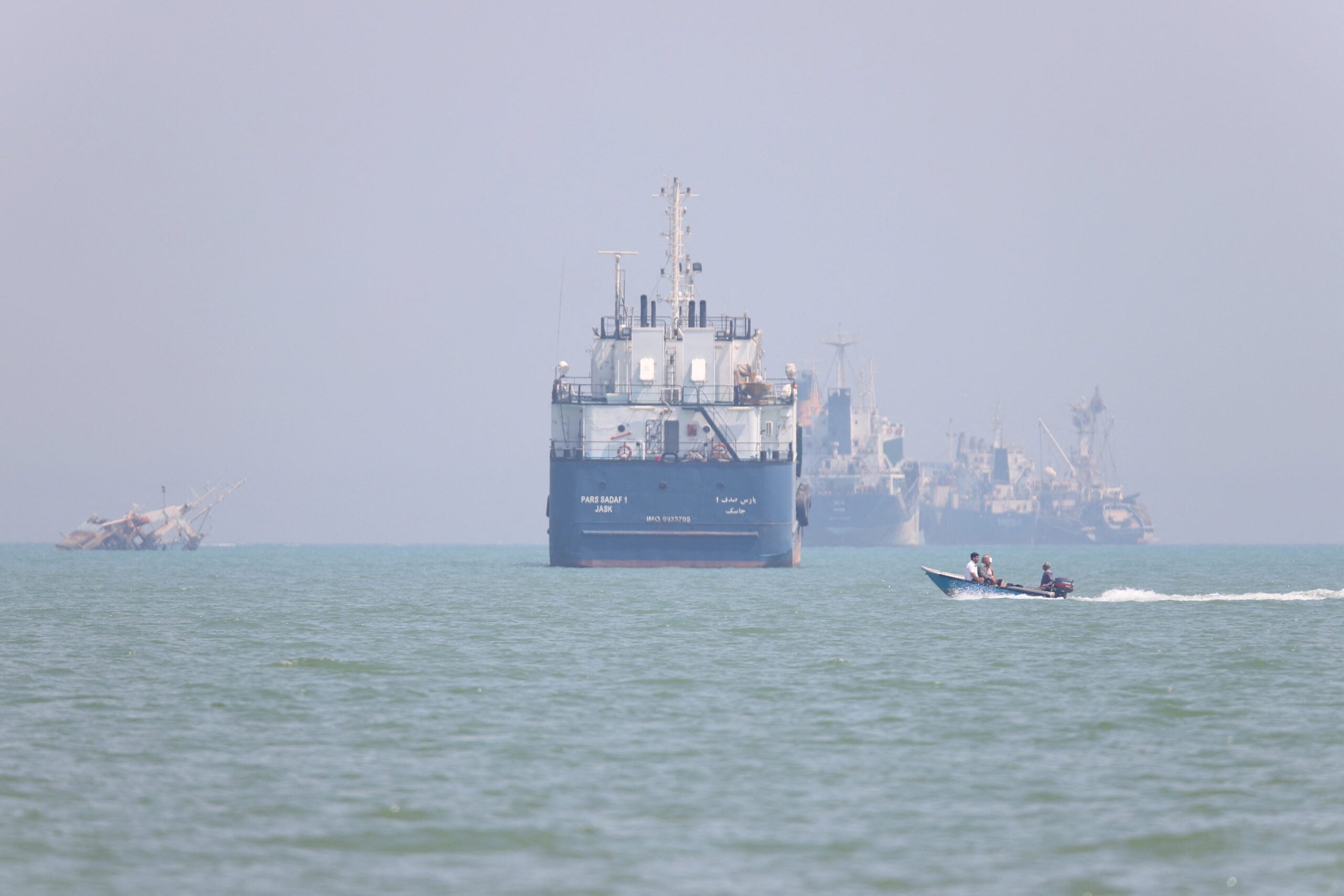
gcaptain.com
Trump Says Hell Sign Deal With Iran to Reopen Hormuz Sunday

indianexpress.com
Cockroach Janata Party Protest Amritsar Abhijeet Deepke

irishtimes.com