www.bankingnews.gr · · GR
It Even Surpassed World War I Russia S Shock to the West What Moscow S Resilience Reveals About the Limits of Sanctions
News Analysis — AI Analysis
Original analysis generated by News Analysis. This is our own commentary on the story, not the publisher's article text.
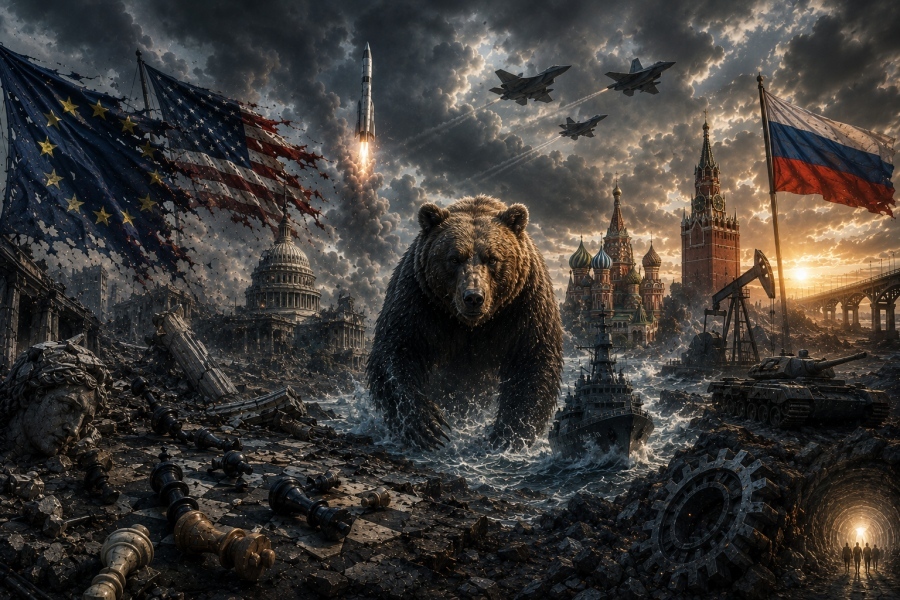
The article analyzes the Russia-Ukraine conflict, noting that its duration has now surpassed World War I, suggesting a prolonged global crisis. It examines the failure of Western economic sanctions—such as freezing reserves and imposing oil price caps—to force a military resolution, arguing that Russia absorbed these shocks by adapting its economy. The analysis suggests that for major powers willing to endure isolation, sanctions are merely costs rather than effective tools of coercion.
Key points
- The Russia-Ukraine war has become the longest continuous conflict in Europe since World War II, surpassing the duration of WWI (1,568 days).
- Western powers initially believed that comprehensive economic pressure could substitute for military action to force a great power's withdrawal.
- Sanctions implemented included freezing $300 billion in reserves, cutting off SWIFT access, and imposing oil price caps, representing an extensive blockade.
- Despite the sanctions, Russia's economy showed resilience, rebounding after initial dips and maintaining its military efforts.
- The article posits that sanctions impose costs but do not constitute coercion, especially when non-Western nations maintain trade links.
Claims assessed
- VerifiableThe belief in early 2022 was that a combination of economic pressure could force Russia to abandon its objectives without military intervention.
- VerifiableWestern sanctions, including oil price caps and reserve freezes, constituted the most extensive economic blockade ever imposed on a major economy.
- VerifiableRussia's ability to absorb Western sanctions is due to its willingness to pay the price of isolation and support from non-Western countries.
Missing context
The article does not provide current details regarding the specific military or political objectives of Russia's continued conflict, nor does it detail the full extent of non-Western support that sustains its economy.
Topic context
The full article is on the original publisher site.
AI insight
AI-generatedRedirected Russian commodity flows are expected to keep global energy input costs elevated (2-3% short-term; 8-15% mid-term), while crude oil benchmarks maintain a structural premium. Key risk: The sustained geopolitical premium is vulnerable to rapid collapse if a significant global economic deceleration occurs.
The news highlights Russia's economic resilience and ability to maintain high crude oil export volumes, particularly to India, despite extensive Western sanctions (G7 oil price cap, frozen reserves). This suggests continued demand for Russian energy commodities and potential circumvention of existing supply restrictions. The primary commercial mechanism is the market proving that sanctioned commodity flows can be redirected and maintained.
Signals our AI researcher identified
Extracted by our AI model from this article and related public sources — not direct quotes from the publisher.
- Russia-Ukraine war duration surpassed World War I's length.
- Russian GDP growth reached 4.3% in 2024.
- Russian crude oil exports to India surged from 50,000 bpd (2020) to 1.7 million bpd (2024).
- Russia's military spending reached $190 billion in 2025.
Affected products & commodities
- Russian crude oil
- Energy inputs (general)
Supply-chain signals
- G7 oil price cap effectiveness
- Global energy trade routes (India-Russia)
- Sanction circumvention mechanisms
Historical parallels
- Previous geopolitical conflicts have shown commodity flows redirecting to non-sanctioning buyers, maintaining supply despite Western restrictions.
This analysis would be wrong if
If major international indices or regulatory bodies issue data proving that sanctions enforcement mechanisms have significantly tightened, or if concrete evidence emerges of a sharp decline in global industrial demand.
Crude oil prices are expected to maintain a high floor over the next 3-4 weeks due to structural shifts in global trade. The key risk is that a major economic slowdown erodes the geopolitical premium.
Sign in to see all sector verdicts, full thesis and counter-argument debate.
Sector impact at a glance
- COMMODITY_OILmid
- COMMODITY_OILshort
- GLOBAL_ENERGYmid
- GLOBAL_ENERGYshort
Related stories
bankingnews.gr
it even surpassed world war i russia s shock to the west what moscow s resilience reveals about the limits of sanctions title=

finanznachrichten.de
68803103 veraxa biotech gmbh veraxa biotech establishes in vitro proof of concept for novel bitac adc technology platform and launches partnering discussions 399
finance.yahoo.com
Elon Scared Conversation Democrat Fires

proactiveinvestors.com
Ftse 100 Live Stocks and Pound Fall Bank of England Holds Rates
ibtimes.co.uk