www.independent.co.uk · · GB
Ice Database Protesters Domestic Terrorists Letter Congress B
News Analysis — AI Analysis
Original analysis generated by News Analysis. This is our own commentary on the story, not the publisher's article text.
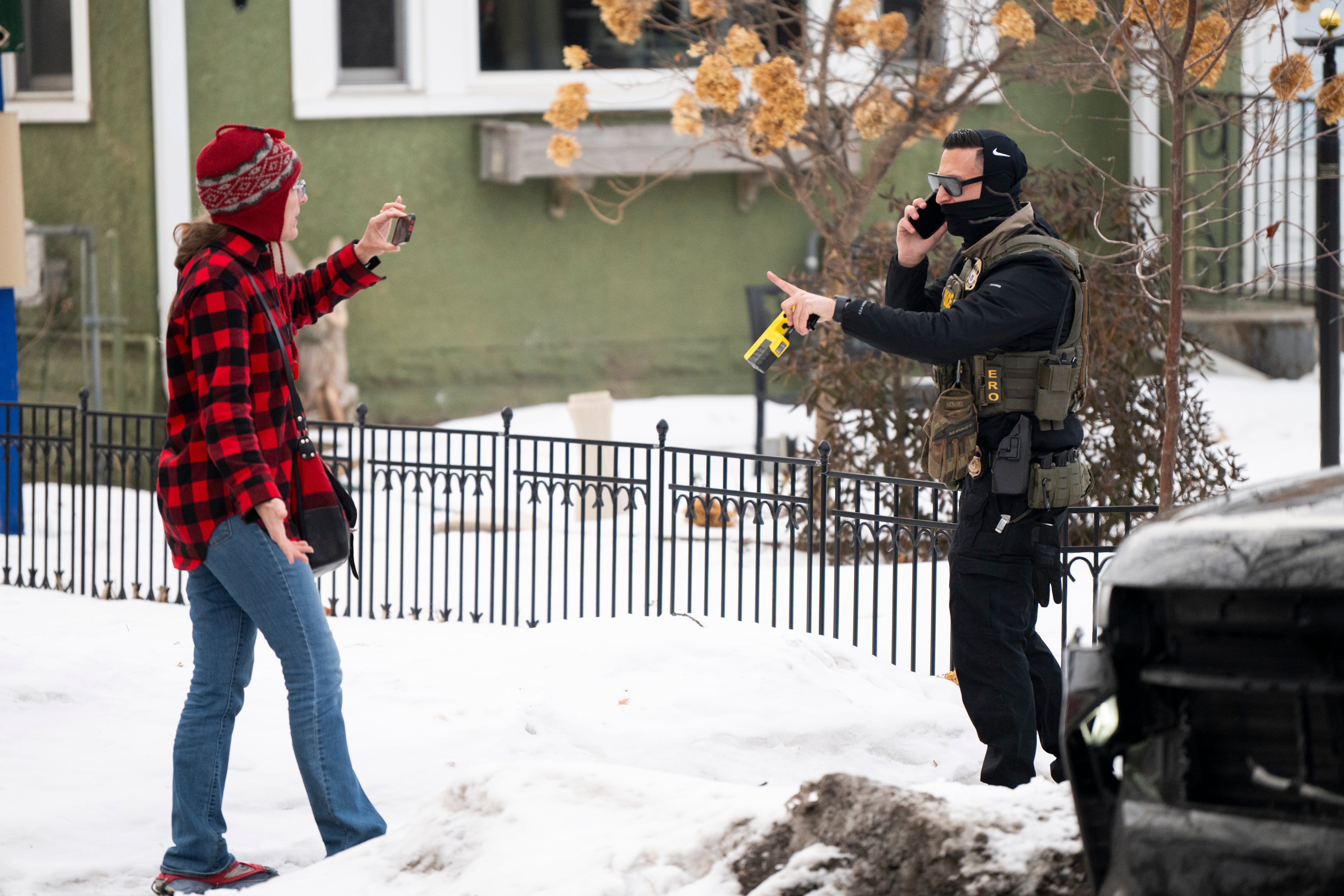
Despite repeatedly denying the existence of a 'domestic terrorist' database, documents submitted to Congress suggest that DHS and ICE collect and maintain detailed information on protesters and legal observers. This data collection occurs even when individuals are not arrested or formally accused of any crime. The agency maintains this collected information as official government records.
Key points
- DHS has repeatedly denied maintaining a database of domestic terrorists, but submitted documents suggest otherwise.
- The department collects extensive personal and biometric data on people who encounter ICE agents, even if they are not detained or charged with crimes.
- Collected information includes biographic details, facial scans, license plate numbers, and situational details for investigative purposes.
- Concerns are raised that this surveillance could have lasting consequences for citizens exercising their constitutional rights, such as filming federal operations.
Claims assessed
- VerifiableDHS has repeatedly denied maintaining a database of domestic terrorists.
- VerifiableA letter to Congress suggested that DHS keeps detailed information on protesters and observers, even if they are not arrested or accused of crimes.
- VerifiableThe collected data includes biographic, biometric, and situational details for law enforcement purposes.
- VerifiableICE officers have been filmed collecting personal information from bystanders during operations across the country.
Missing context
The article does not specify which specific laws or regulations authorize DHS/ICE to collect this extensive data from non-suspects, nor does it detail the oversight mechanisms in place for how this collected information is stored, accessed, or eventually destroyed.
Topic context
The full article is on the original publisher site.
AI insight
AI-generatedRegulatory focus on civil liberties pushes Biometric data services and Facial recognition technology deployment down in both the short-term (revenue deceleration) and mid-term (structural contraction). The key risk is that high-risk providers will circumvent compliance through regulatory arbitrage rather than undergoing costly structural R&D shifts.
The news describes government surveillance practices (biometric/facial recognition) concerning civil liberties, not a direct commercial mechanism affecting product costs, input supply, or corporate margins. The impact is primarily regulatory and legal, potentially increasing compliance costs for private entities operating in areas with heightened scrutiny, but no specific sector's revenue stream or cost base is explicitly altered by the data collection itself.
Signals our AI researcher identified
Extracted by our AI model from this article and related public sources — not direct quotes from the publisher.
- DHS is scrutinized for alleged database collection on protesters.
- Data collected includes biographic and biometric information.
- Surveillance practices include license plate number collection.
- Facial recognition technology is allegedly used against protesters.
Affected products & commodities
- Biometric data services
- Facial recognition technology (FRT) deployment
Supply-chain signals
- Government surveillance infrastructure
- Data storage and processing capacity
This analysis would be wrong if
If major consumer markets fail to translate civil liberties concerns into systemic negative sentiment, or if the industry successfully proves that mandated upgrade costs are absorbed by end clients.
Mid-term compliance requirements force industrial players to adopt privacy upgrades for Industrial IoT platforms; therefore EM_INDUSTRIALS is affected down.
Sign in to see all sector verdicts, full thesis and counter-argument debate.
Sector impact at a glance
- EM_INDUSTRIALSmid
- GLOBAL_TECHmid
- GLOBAL_TECHshort
Related stories
freebeacon.com
Im Gonna Poison Her a Slowly University of Michigan Students and Graduates Charged by Feds With Violent Anti Israel Plot to Terrorize University Jews
kathmandupost.com
Nepal Police Calls Attention for Unwarranted Arrests
finance.yahoo.com
Cybersecurity Stocks Spotlight U Vulnerability

local10.com
A Burning Cross in a Chicago Park Shocks Residents and Has Police Searching for WHO Did It
clickorlando.com