www.independent.co.uk · · GB
Trump Border Project Big Bend Texas B
News Analysis — AI Analysis
Original analysis generated by News Analysis. This is our own commentary on the story, not the publisher's article text.
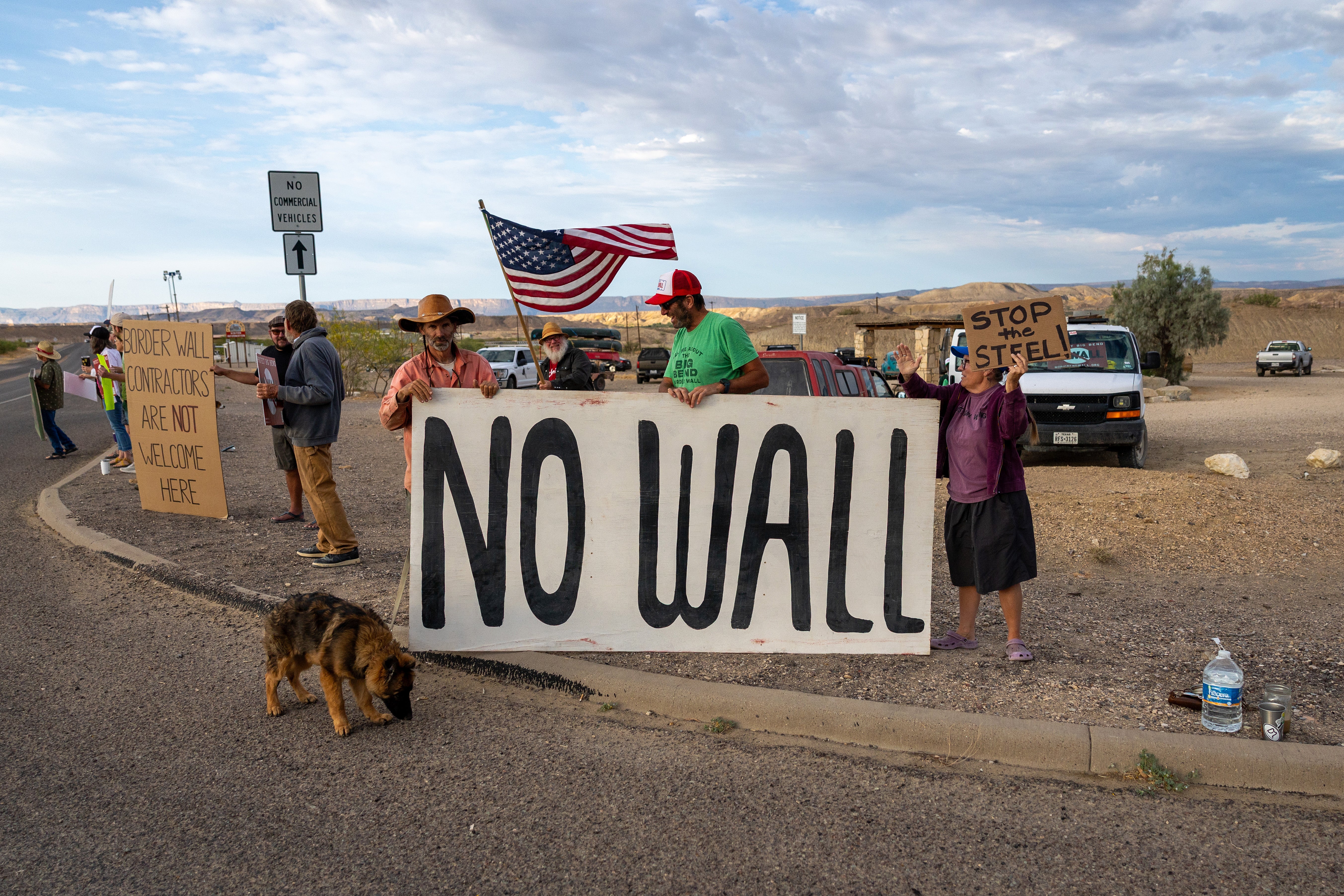
The Trump administration is planning to bypass federal environmental protections through a regulatory waiver to facilitate border infrastructure construction in West Texas's Big Bend region. This preliminary notice covers over 100 miles of the U.S.-Mexico border, extending through both Big Bend National Park and surrounding state lands. The plan involves installing vehicle barriers, surveillance technology, and upgrading patrol roads under a project called "Big Bend 4."
Key points
- The waiver allows Homeland Security to bypass various federal laws for the construction of border infrastructure.
- The affected area spans over 100 miles along the U.S.-Mexico border, including Big Bend National Park and adjacent state lands.
- Project "Big Bend 4" includes vehicle barriers, surveillance technology (like cameras and illuminators), and upgraded patrol roads.
- Advocacy groups have criticized the plan as a disregard for environmental values and park integrity.
- The waiver is described as a revision of an earlier filing, updating GPS coordinates to cover a different stretch of the border.
Claims assessed
- VerifiableHomeland Security plans to bypass various federal laws to ensure the quick construction of barriers and roads along the southern border.
- VerifiableThe planned infrastructure, known as "Big Bend 4," will involve vehicle barriers, surveillance technology, and upgraded patrol roads within Big Bend National Park.
- VerifiableU.S. Customs and Border Protection (CBP) confirms it will not erect a 30-foot-tall steel border wall inside the state or national park.
Missing context
The article does not provide details regarding the specific ecological impact assessments or public hearings that were conducted before this waiver was filed, nor does it detail the legal basis for the 'incorrect' description mentioned in the previous filing.
Topic context
Related topics
The full article is on the original publisher site.
AI insight
AI-generatedThe border security waiver permits immediate, localized demand for construction materials (Concrete/Steel) in the short term, causing a moderate price increase. However, sustained revenue growth for specialized service providers (Tech/Civil Works) is constrained by bureaucratic delays and local regulatory approvals. Main risk: If government funding or project timelines are delayed by permitting issues, the commercial signal weakens significantly.
The regulatory action (waiver) directly affects the construction sector by permitting large-scale infrastructure spending on border security. This increases demand for industrial materials (steel, concrete, vehicle barriers) and specialized technology/logistics services along the U.S.-Mexico border. The impact is regional/border-specific.
Signals our AI researcher identified
Extracted by our AI model from this article and related public sources — not direct quotes from the publisher.
- Construction of border barriers in Big Bend region, Texas.
- Regulatory waiver bypasses federal environmental protections.
- Affects over 100 miles of U.S.-Mexico border.
- Includes vehicle barriers, surveillance technology, and patrol road upgrades.
- Excludes a 30-foot steel wall within National Parks.
Affected products & commodities
- Construction steel
- Concrete materials
- Surveillance technology
- Patrol road infrastructure
Supply-chain signals
- U.S.-Mexico border construction supply chain
- Border security material sourcing
Historical parallels
- (not specified)
This analysis would be wrong if
If concrete data shows that border construction material procurement costs can be passed through to end-users without impacting regional contractor margins, OR if federal/state regulatory bodies announce a significant delay in the waiver implementation or funding.
Specialized infrastructure and technology installation firms are expected to see moderate revenue growth in the medium term. The key risk is that contract realization depends heavily on local regulatory approvals rather than project scope.
Sign in to see all sector verdicts, full thesis and counter-argument debate.
Sector impact at a glance
- EM_CONSTRUCTIONmid
- EM_CONSTRUCTIONshort
- GLOBAL_INDUSTRIALSmid
Related stories

washingtonexaminer.com
Grim Anniversary Fed Government Budget 911 Dimmed Expensive War on Terror
aa.com.tr
Inflationary Pressures Rise in US as New Fed Chair Prepares for 1st Meeting

perthnow.com.au
Philippines Protests Chinas Sanctions on Defence Chief C

latimes.com
Social Security Crisis Senate Campaign

foxnews.com